
The Review Response Paradox: Can the Way You Reply Matter More Than the Review Itself?
A negative review can damage a business’s reputation. But sometimes, the way a business responds can reveal more than the complaint itself.
Imagine two businesses with similar one-star reviews. One ignores the feedback. The other acknowledges the issue, explains what it is doing to address it, and invites the customer to continue the conversation.
A prospective customer reading both reviews sees the same initial problem. What changes is the impression of the business behind it.
The review describes an experience. The response reveals how the business handles it.
And in a marketplace where customers routinely compare businesses before making a decision, that distinction matters.
The Reputation Gap Businesses Often Overlook
Most businesses invest time in collecting positive reviews, monitoring their average rating, and encouraging satisfied customers to share their experiences. Yet reputation management is not just about what customers say. It is also about what a business chooses to say back.
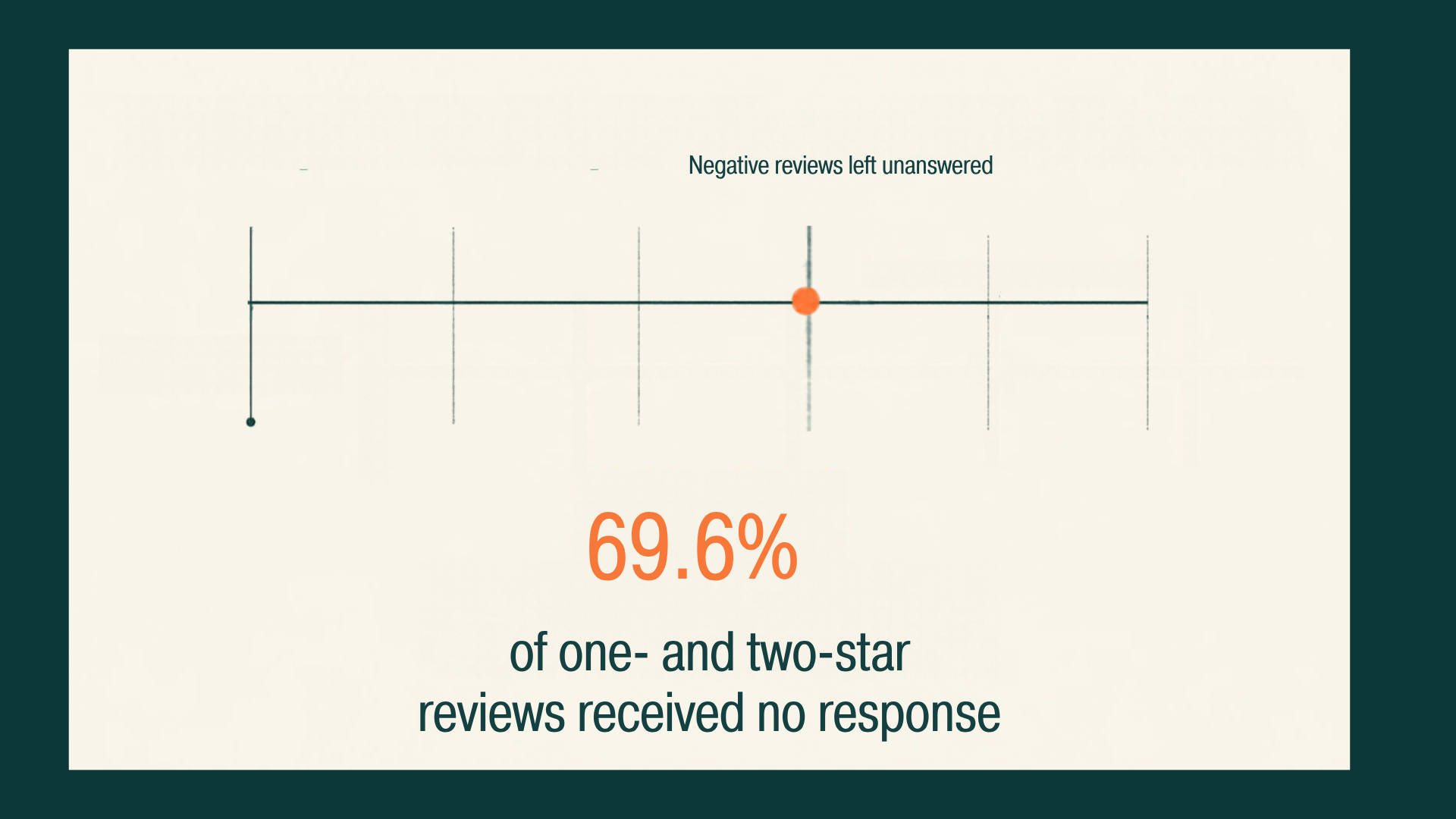
Consider the data. An analysis by Suff Digital of 130,269 Google reviews across 10,039 US local businesses found that 69.6% of one- and two-star reviews received no response.zee
That means a large share of negative feedback is left publicly unanswered.
[Insert infographic: 69.6% of negative reviews go unanswered.]
An unanswered review does not automatically mean a business is indifferent. There may be context that outsiders cannot see. But to a potential customer, silence offers no visible evidence that the concern was acknowledged or addressed.
This is the reputation gap: the difference between how a business believes it handles customer feedback and what a prospective customer can actually observe online.
Your Response Is Part of the Customer Experience
A review response is often treated as an administrative task: reply, apologise, close the loop, move on.
But the response is also a public interaction with an audience beyond the original reviewer.
A prospective customer may never experience the original service failure. They may, however, read the complaint and the business’s reply before deciding whether to book, visit, or buy.
Research published in Tourism Management has found that managerial responses to negative online reviews can influence customers’ perceptions of trustworthiness and concern. The quality of the response matters, not simply its existence.
A defensive reply can make a manageable complaint look like a larger problem. A generic apology can sound automated and detached. A thoughtful, specific response can signal that the business takes feedback seriously.
The objective is not to win an argument with the reviewer. It is to demonstrate sound judgment to everyone reading the exchange.
Not All Replies Create the Same Impression
The difference between a weak response and a strong one is rarely about length. It is about whether the reply addresses the actual concern.
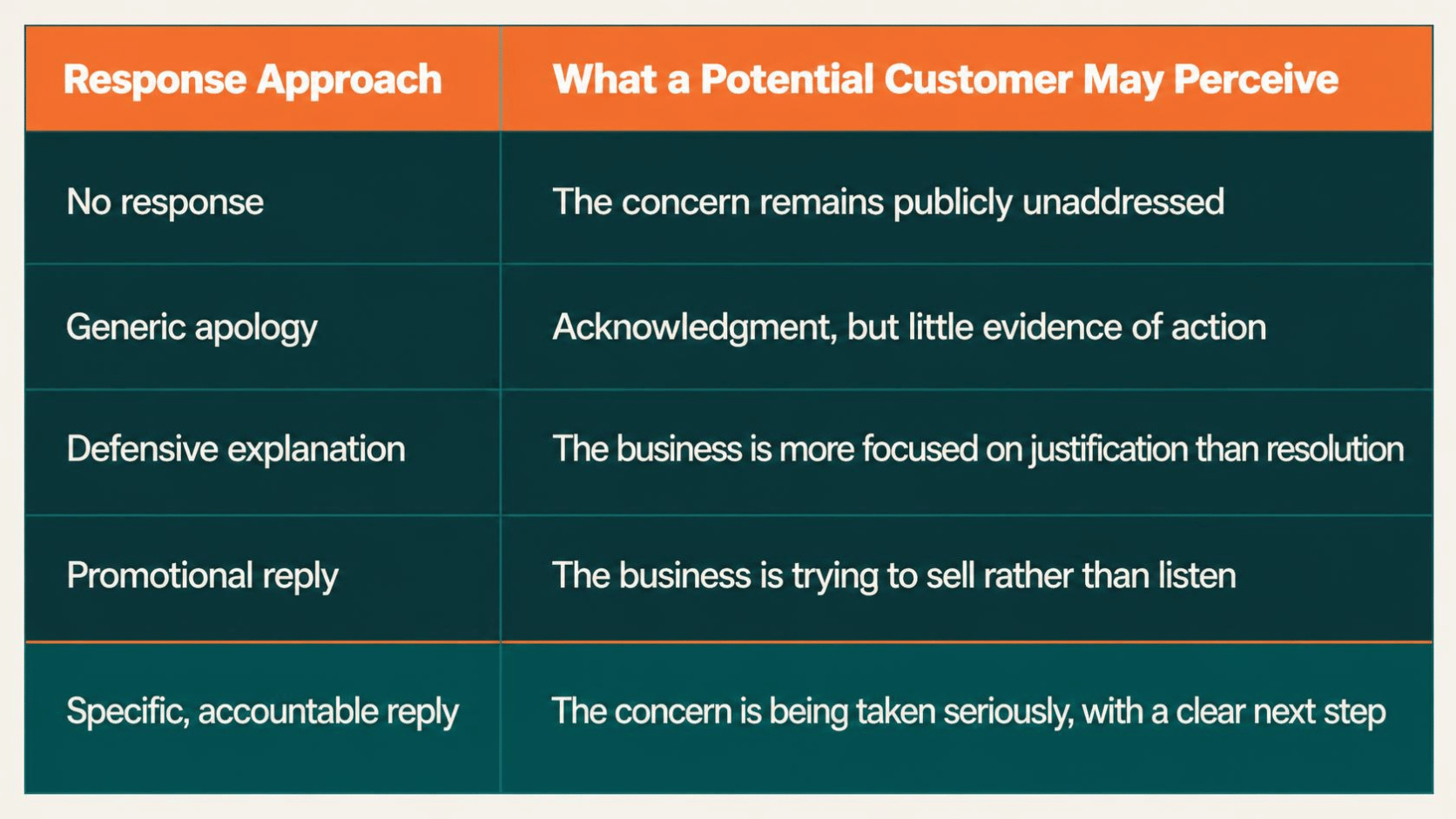
These are possible customer interpretations, not guaranteed outcomes. Context matters: a business should not automatically accept inaccurate allegations or disclose private customer information just to appear agreeable.
The goal is a response that is professional, proportionate, and credible.
What a Better Response Actually Looks Like
Consider this review:
“I waited 40 minutes past my appointment time, and nobody updated me. Very disappointing experience.”
A generic response might read:
“We apologise for the inconvenience. Your feedback is valuable to us.”
It is polite, but it does not show that the business understood the problem.
A more considered response would be:
“We understand how frustrating it is to wait without an update. We’re reviewing how appointment delays are communicated so customers have clearer expectations. We’d appreciate the opportunity to understand your experience further and address your concerns.”
The second response acknowledges the specific issue, identifies a possible improvement, and offers a next step without making promises the business may not be able to keep.
A useful framework is straightforward:
Acknowledge the issue. Show understanding. Explain the next step. Offer a way to follow up.
Not every review needs a lengthy response. A simple complaint may need only a concise acknowledgment and a practical resolution path. Serious or sensitive issues may require private follow-up and internal investigation.
Authenticity comes from relevance, not from using more words.
From Responding to Learning
The bigger opportunity begins when businesses stop treating every review as an isolated event.
If customers repeatedly mention delayed appointments, inconsistent service, billing confusion, or poor communication, the problem may extend beyond reputation. It may point to a process that needs attention.
This is where review management becomes reputation intelligence.
Businesses can track a small set of meaningful measures:
Response coverage: What percentage of negative reviews receive a reply?
Response time: How long does it take to acknowledge feedback?
Recurring issues: Which complaints appear repeatedly across customers or locations?
Resolution follow-through: Are promised next steps actually completed?
Feedback trends: Are recurring concerns becoming less frequent over time?
These measures shift the focus from simply maintaining a rating to understanding the experiences behind it.
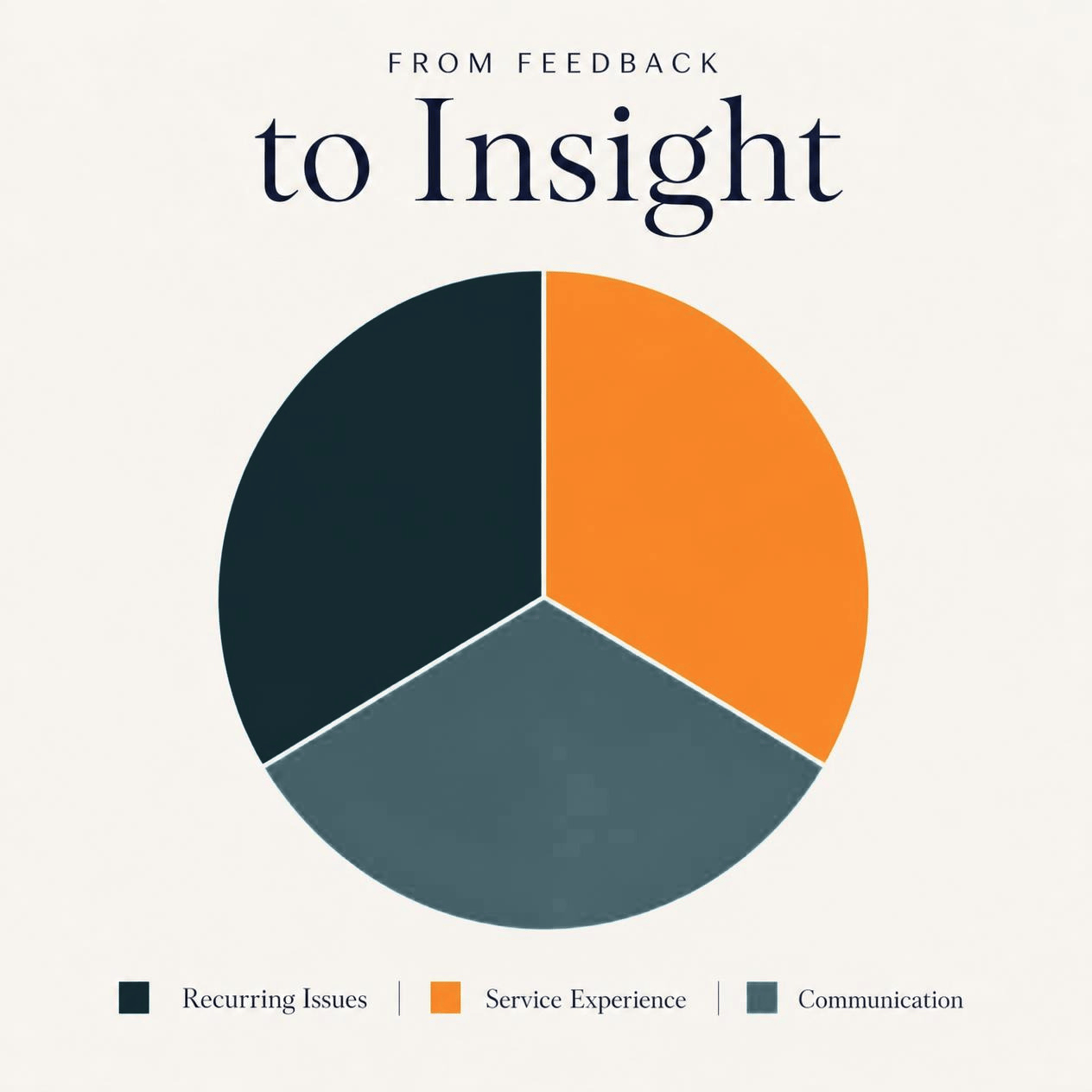
AI can help categorise feedback, identify recurring themes, and draft context-aware responses at scale. But automation should not mean publishing the same apology everywhere. Sensitive complaints, disputed claims, and situations requiring operational decisions still need human judgment.
Technology should make responses more consistent without making them feel less human.
The Competitive Advantage Is in What Happens Next
A business cannot control every customer experience, and not every negative review can be resolved publicly. What it can control is whether feedback receives thoughtful attention and whether recurring problems lead to action.
That is the real opportunity hidden inside the review response paradox.
The strongest reputation is not necessarily the one with no criticism. It is the one where prospective customers can see a consistent effort to listen, respond, and improve.
Reviews show people what customers experienced. Your responses show them what kind of business they can expect you to be.