
Your Online Reputation Is Working Before Your Sales Team Does

A customer may discover your business through an ad, a search result, Instagram, or a recommendation. But before they decide to call, visit, book, or buy, there is a good chance they will check what other customers have said.
That makes your online reputation one of the first conversations your business has with a potential customer — often before your team gets the opportunity to speak.
And unlike a salesperson, your reviews are working 24/7.
They are influencing first impressions, answering questions, creating trust, raising concerns, and sometimes even deciding whether a customer takes the next step.
The real question isn't whether your business has reviews.
It's whether you're actively managing what those reviews are saying.
Your Rating Is Only the Beginning
Most businesses look at one number first:
⭐ 4.2
⭐ 4.5
⭐ 4.8
But a rating alone doesn't tell the complete story.
Two businesses can have the same 4.5-star rating and create completely different impressions.
Customers also look at:
How recent the reviews are
How many reviews the business has
What customers repeatedly praise
What customers repeatedly complain about
Whether the business responds
How the business responds to criticism
Whether responses feel genuine or automated
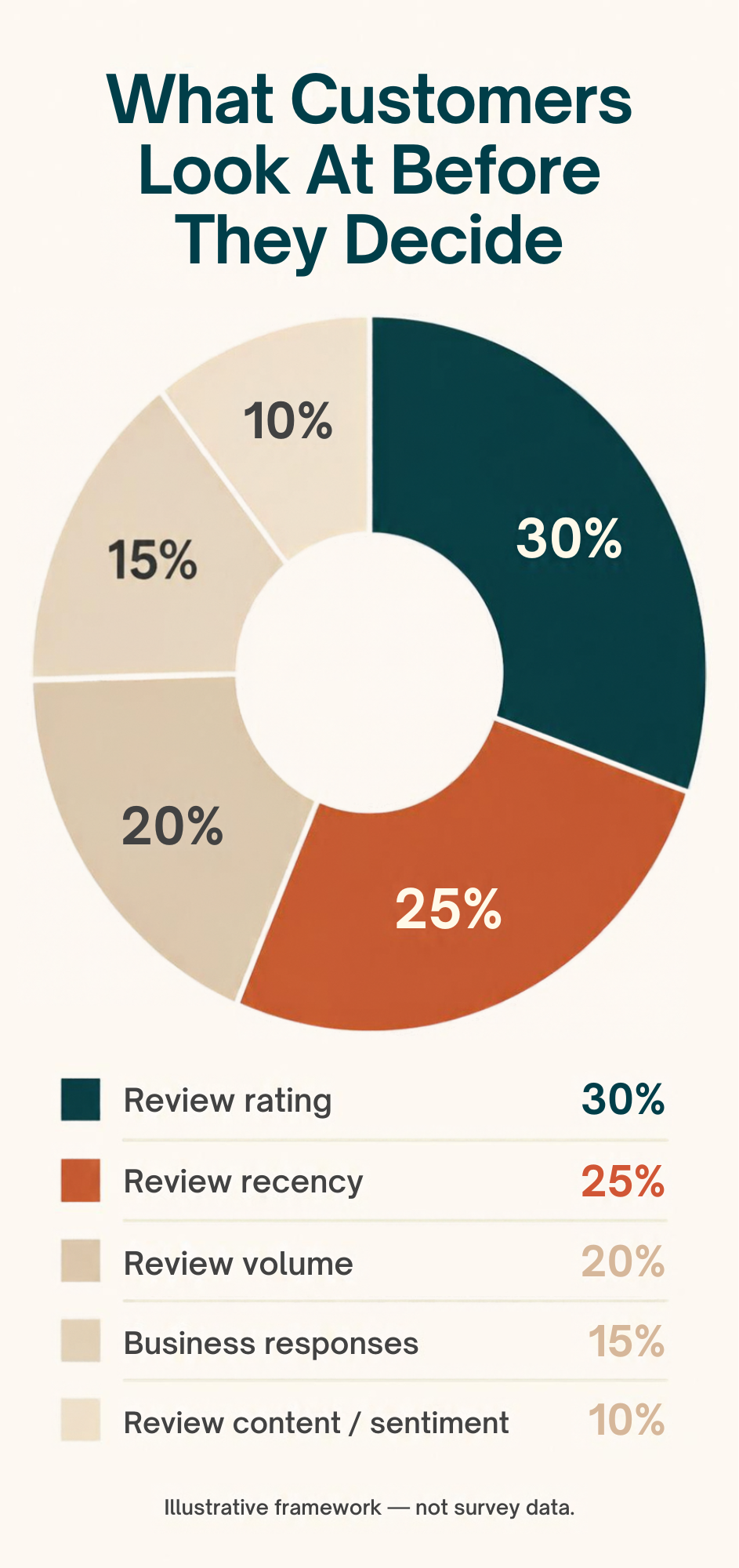
Your reputation is not just a score.
It's the story behind the score.
The Unanswered Review Problem
A customer leaves a review.
Then nothing happens.
No response.
No acknowledgement.
No attempt to understand the issue.
For the business, it may feel like a small task that can be handled later.
For the customer reading that review weeks later, the absence of a response can become part of the impression.
An unanswered review doesn't mean your business is bad. But it does mean you're leaving a public conversation unmanaged.
And that applies to positive reviews too.
A simple, thoughtful response can acknowledge the customer's experience and show future customers that the business is paying attention.
A healthy review-management process should include:
Responding consistently
Prioritising recent and negative reviews
Acknowledging specific customer feedback
Avoiding repetitive copy-paste responses
Taking serious complaints into a private resolution process when appropriate
Your customers are talking about your business. Your response becomes part of that conversation.
Negative Reviews Aren't the Enemy
No business can realistically expect every customer experience to be perfect.
Things go wrong.
Orders get delayed.
Appointments get missed.
Communication breaks down.
Expectations aren't met.
The important part is what happens next.
A negative review can reveal something a business needs to fix — and a thoughtful public response can demonstrate how the business handles problems.
Instead of thinking:
“How do we get rid of negative reviews?”
A better question is:
“What can this review teach us, and how should we respond?”
A strong reputation strategy doesn't try to pretend problems don't exist.
It makes sure the business responds to them properly.
Your Reviews Are Also Business Data
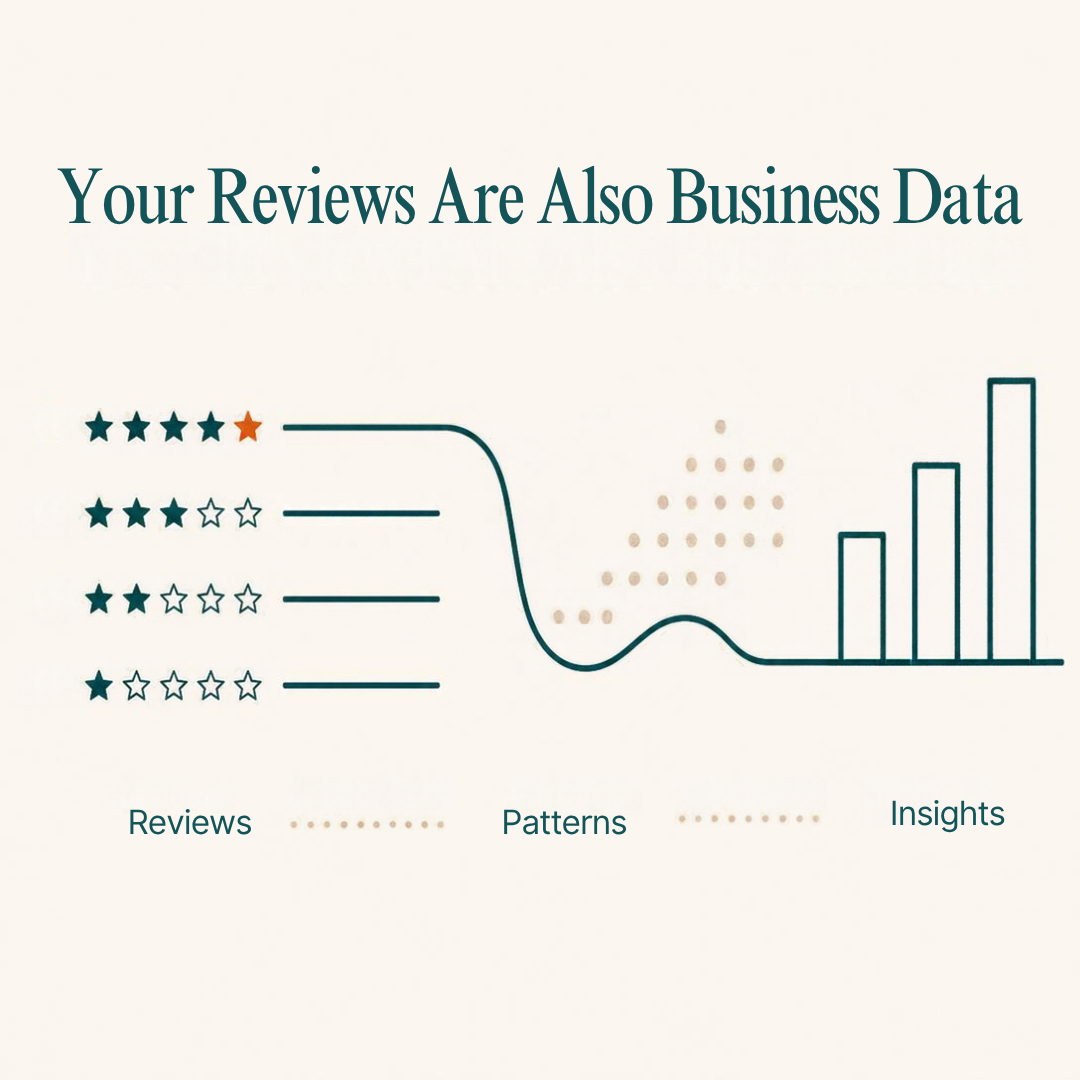
This is where reviews become much more valuable than many businesses realise.
Imagine you receive 100 reviews over a few months.
Individually, each review is customer feedback.
Together, they can reveal patterns.
You may discover that customers repeatedly mention:
Slow response times
Delivery delays
Staff behaviour
Product quality
Appointment experience
Pricing confusion
Difficulty contacting support
A particular product or service they love
These patterns can tell you more than your average rating ever could.
Reviews can help answer questions like:
What are customers happiest about?
Where are customers getting frustrated?
Which problems keep appearing?
What should the business improve first?
What strengths should be highlighted in marketing?
That turns reputation management into something bigger than replying to reviews.
It becomes a source of business intelligence.
The Review Momentum Matters Too
Imagine two businesses.
Business A
4.7★ — 1,800 reviews
But only a handful of new reviews appear every month.
Business B
4.6★ — 650 reviews
But customers are consistently leaving fresh reviews.
A customer doesn't only see the rating.
They see the recent activity around the business.
Fresh reviews help potential customers understand what the current customer experience looks like.
That's why businesses shouldn't think about reviews as something they collect once and forget.
Reputation needs ongoing momentum.
That means:
Creating easy opportunities for happy customers to leave feedback
Making the review process simple
Consistently engaging with incoming reviews
Monitoring changes in sentiment
Learning from recurring feedback
The goal isn't simply more reviews.
It's a steady stream of authentic customer feedback.
Stop Asking Customers to “Give 5 Stars”
There is a difference between asking for feedback and asking for a specific rating.
Instead of:
“Please give us 5 stars.”
Think about creating a better customer journey:
Great experience → Easy feedback request → Customer chooses whether to review → Review reaches your public profile
The easier the process is, the less friction there is between a happy customer and their decision to leave feedback.
The experience should feel like an invitation, not pressure.
And Then There Is the Human Test
Here's an easy way to judge your review responses:
Remove your business name.
Read the response.
Could it belong to any business?
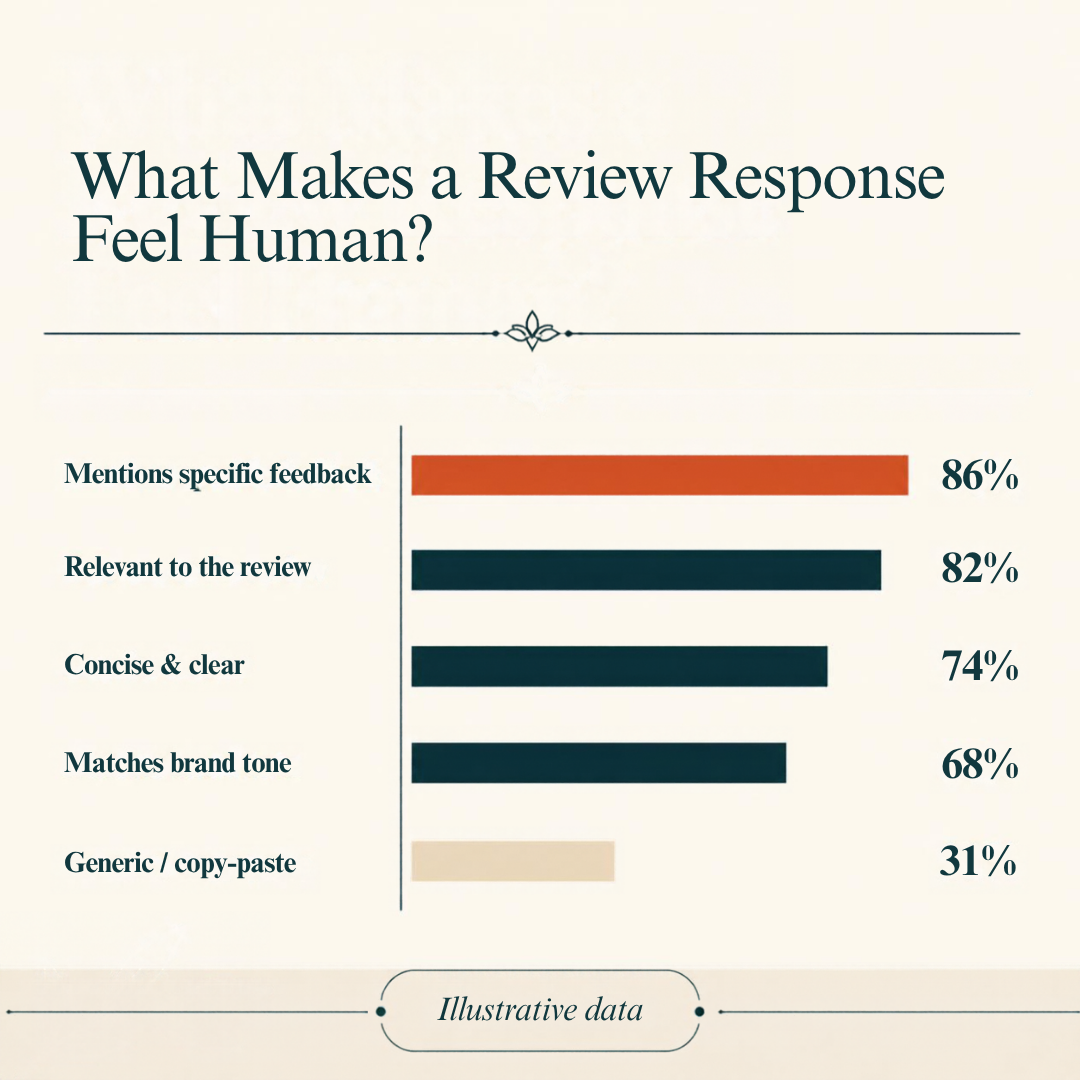
If the answer is yes, the response may be too generic.
Compare:
“Thank you for your valuable feedback. We are delighted to hear that you had a great experience.”
with a response that actually references what the customer appreciated.
The second feels more personal because it shows that someone — or something working on behalf of the business — actually understood the review.
Good responses should ideally be:
Relevant to the customer's message
Concise
Professional
Human-sounding
Appropriate to the situation
Consistent with the brand's tone
Automation can make reputation management faster.
But speed shouldn't come at the cost of authenticity.
What a Modern Reputation System Should Actually Do
Managing reviews manually can work when a business has very few locations and very little review activity.
As the business grows, however, the process becomes harder to maintain.
A modern reputation system should help businesses:
Monitor incoming reviews
Detect important customer sentiment
Prioritise negative or urgent feedback
Respond faster
Maintain a consistent brand voice
Encourage customers to share feedback
Identify recurring customer issues
Track reputation trends
Turn feedback into actionable insights
The objective isn't to replace the human side of customer experience.
It's to make sure important customer conversations don't get lost.
This Is Where StarOwl Comes In
StarOwl is built around a simple idea:
Your reputation deserves to be managed like every other important part of your business.
Instead of treating reviews as something you occasionally check, StarOwl helps bring reputation activity into one workflow.
You can use it to:
Monitor
Keep track of what customers are saying about your business.
Respond
Create timely, relevant responses without spending hours manually writing every reply.
Understand
Identify patterns and customer sentiment hidden inside your reviews.
Grow
Make it easier for satisfied customers to share their experience.
Protect
Stay aware of negative feedback and address issues before they become bigger problems.
Because reputation management shouldn't begin when a business suddenly notices its rating dropping.
It should be an ongoing process.
Your Reputation Is Already Being Built
Every review contributes to how future customers see your business.
Every unanswered complaint leaves a gap.
Every thoughtful response adds context.
Every new customer experience creates another opportunity to strengthen your reputation.
You don't completely control what customers say.
But you can control how your business listens, responds, learns, and improves.
And in a world where customers can compare businesses in seconds, that difference matters.
Before your next customer calls, books, visits, or buys —
take a look at what your reputation is already saying.
StarOwl
Monitor. Respond. Grow.