
Your Customers See One Business. Why Does the Internet See Three?
A customer discovers you on Instagram.
They like what they see.
They visit your Google Business Profile.
They read your reviews.
They look at your photos.
They check whether the business feels trustworthy.
Then they make a decision.
It sounds like one customer journey.
But behind the scenes, most businesses treat it as four completely different jobs.
Someone manages Instagram.
Someone responds to Google reviews.
Someone updates the business profile.
Someone notices negative feedback—usually after it has already become a problem.
And nobody is really responsible for connecting the dots.
That is the problem.
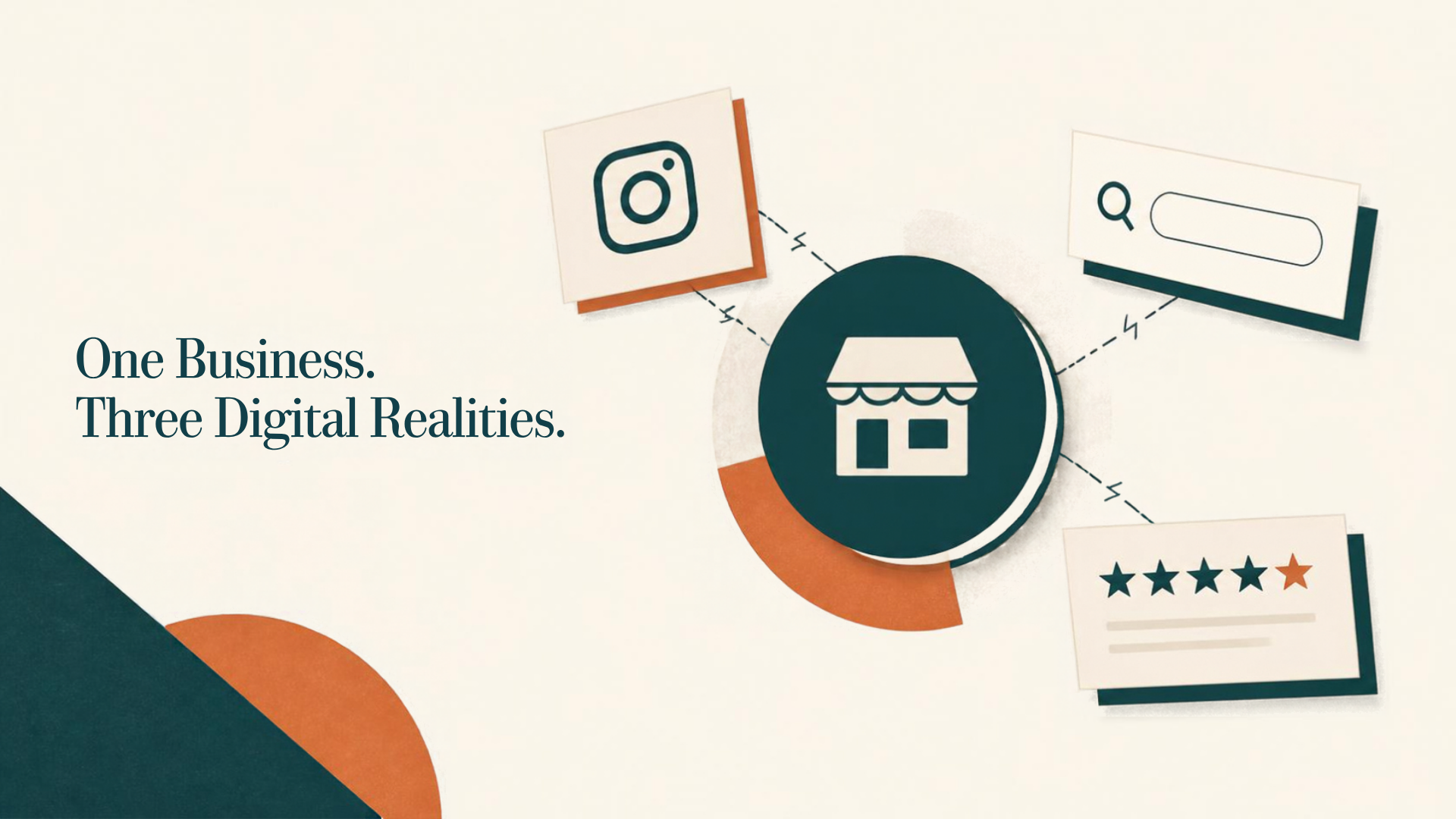
Your customer sees one business.
Your digital presence behaves like several.
And in local business, that disconnect can quietly cost you customers.
Your Digital Presence Is One Experience. Your Tools Don't Know That.
Think about what happens when someone discovers a restaurant, salon, clinic, hotel, or local service business today.
They might first see an Instagram Reel.
Then search the business on Google.
Then look at the rating.
Then read a few recent reviews.
Then check the photos.
Then look at what other customers are saying.
Then decide whether to visit, call, book, or move on.
The customer doesn't think:
“Now I'm switching from social media to reputation management.”
They simply think:
“Do I trust this business?”
That's the real journey.
But businesses often manage every part of it separately.
Instagram is about content.
Google is about search.
Reviews are about feedback.
Reputation is about monitoring.
And customer engagement is handled somewhere else.
The result?
A business can have a great Instagram presence but an outdated Google profile.
It can have hundreds of customers but very few recent reviews.
It can receive positive feedback but never turn that feedback into visibility.
It can receive a negative review and discover it days later.
It can create content every week without learning what customers actually think.
The pieces exist. The system doesn't.
The Real Local Growth Loop
There is a much more powerful way to look at local growth.
A customer discovers you.
↓
They search for you.
↓
They evaluate your reputation.
↓
They visit or buy.
↓
They have an experience.
↓
They leave feedback.
↓
That feedback strengthens your online presence.
↓
The next customer discovers you.
And the loop starts again.
This is not just reputation management.
It is a growth loop.
The problem is that most businesses only focus on one or two parts of it.
They create content to generate discovery.
They ask for reviews when they remember.
They respond to reviews when someone has time.
They update Google occasionally.
And they hope all of it eventually translates into growth.
Hope isn't a system.
Reviews Aren't the End of the Customer Journey
A review is often treated as the final step.
Customer buys.
Customer reviews.
Done.
But a review is actually the beginning of another customer's journey.
Imagine someone searching:
“Best salon near me.”
They find five businesses.
One has a 4.1 rating with reviews from eight months ago.
Another has a 4.5 rating with hundreds of reviews—but very little recent activity.
Another has a 4.8 rating with fresh reviews describing real customer experiences.
The customer isn't simply looking at the number.
They're looking for signals of current trust.
Is this business active?
Are customers still coming here?
Does the business respond?
What do people consistently praise?
How does the business handle problems?
Does the experience described by customers match what the business shows on Instagram?
Your reviews aren't just feedback.
They're public evidence of your business.
And that evidence keeps working long after the customer who wrote it has left.
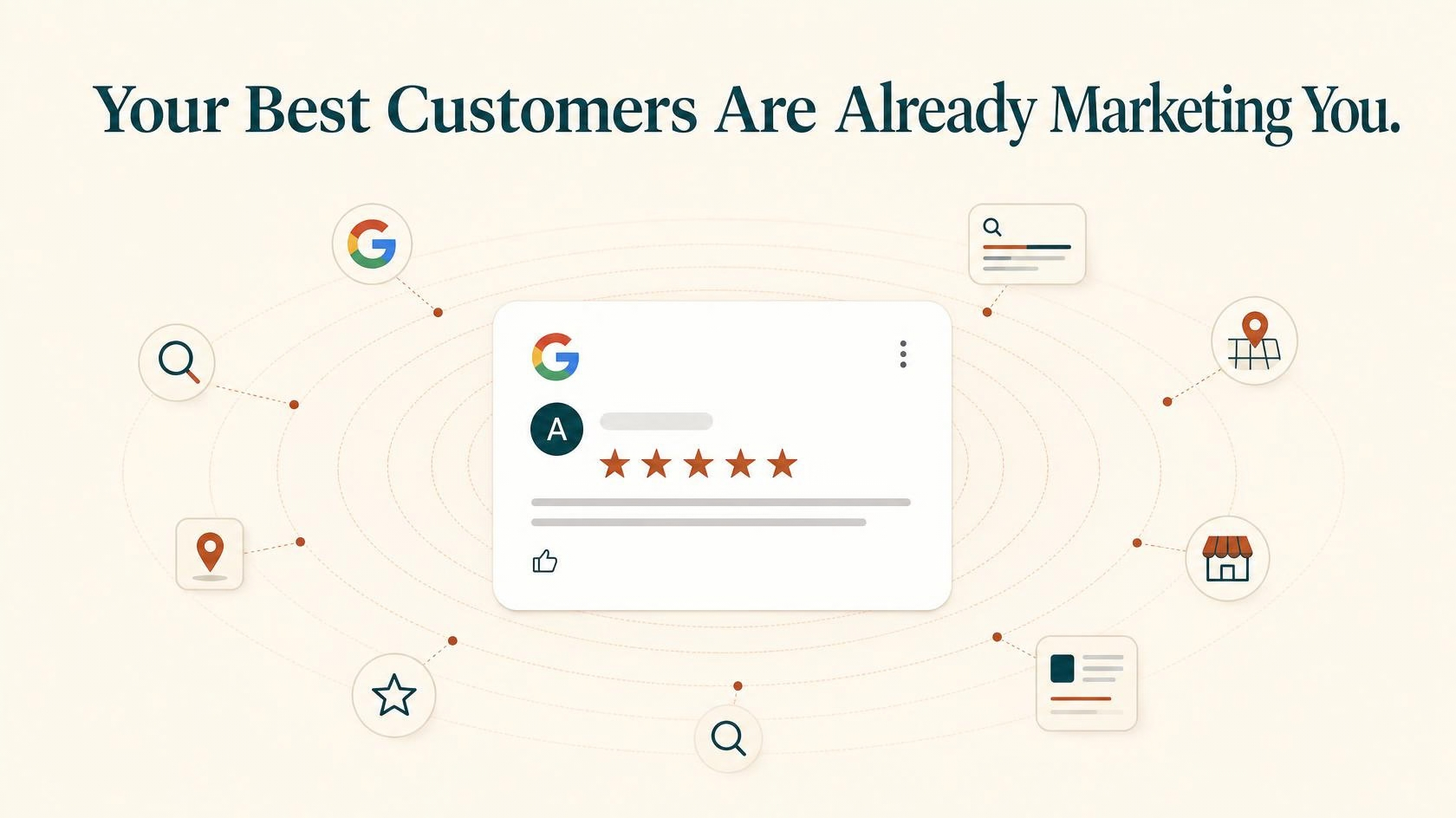
Your Best Customers Are Already Creating Your Marketing
Every day, customers are saying things about businesses that marketers spend hours trying to write.
They talk about:
what they loved
what surprised them
what made them return
which employee helped them
what product they preferred
how quickly they were served
what experience they had
That's incredibly valuable information.
Yet most businesses treat reviews as something to collect and reply to.
They rarely treat them as business intelligence.
Imagine knowing what customers consistently appreciate.
Imagine spotting recurring complaints before they become patterns.
Imagine turning genuine customer language into content.
Imagine knowing which parts of your business customers naturally talk about.
Your customers are already telling your story.
StarOwl helps you listen to it.
What If Instagram and Google Actually Worked Together?
Here's another missed opportunity.
Your Instagram content shows people what your business looks like.
Your Google presence tells them what customers think.
One creates interest.
The other creates trust.
Together, they can become much more powerful.
A customer sees your Instagram post.
They become curious.
They search your business.
They see your Google profile.
They find recent reviews.
They see the business is active.
They see customers are talking about it.
They feel confident.
They visit.
Then their own experience can become the next review.
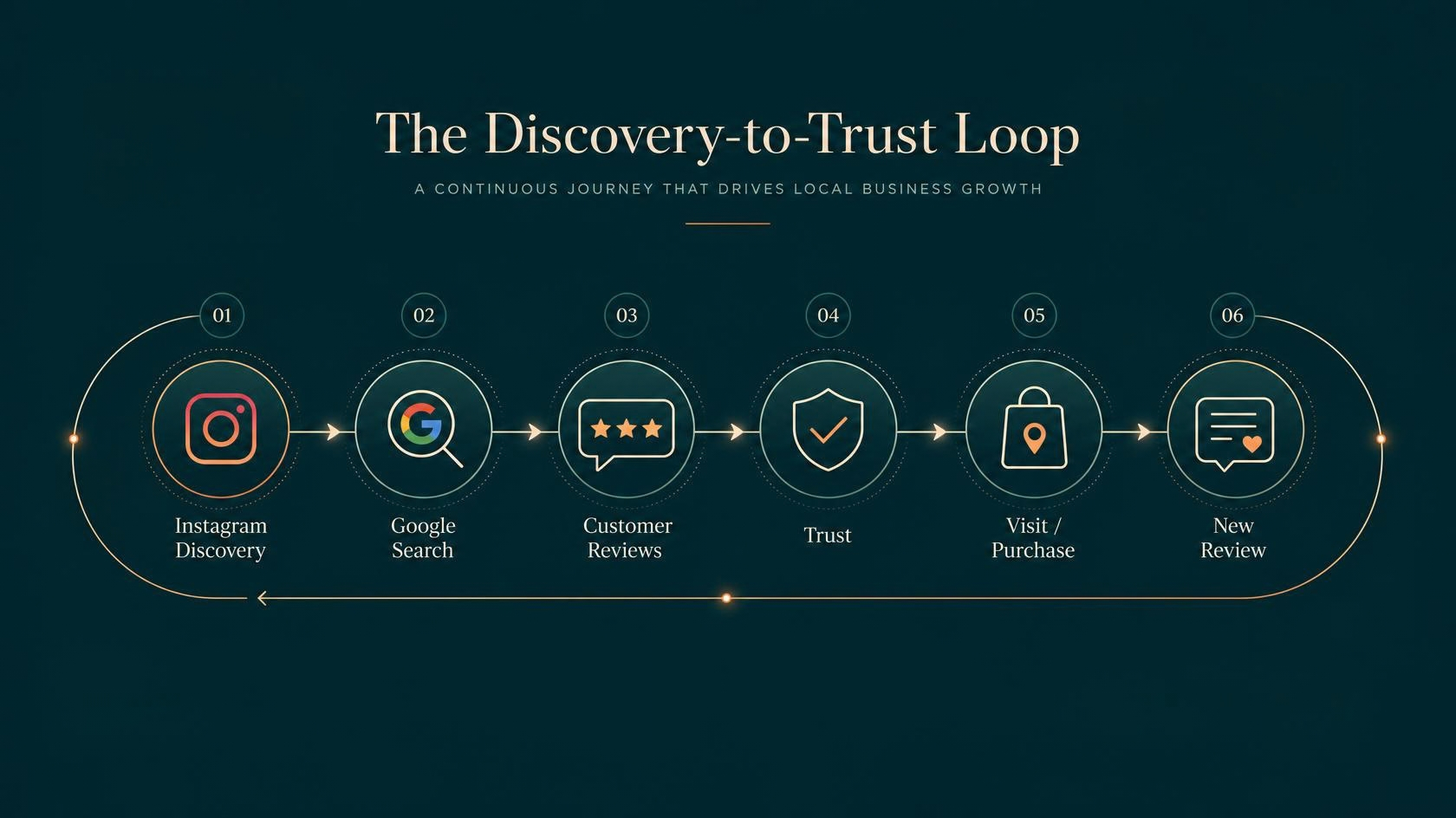
That creates a loop:
Content → Discovery → Google → Trust → Customer → Review → Visibility
Instead of treating Instagram and Google as separate marketing channels, you start treating them as parts of the same customer journey.
That's a fundamentally different way to think about local marketing.
The Problem Isn't a Lack of Data. It's a Lack of Attention.
Most business owners already have enough information.
They have reviews.
They have social posts.
They have customer feedback.
They have Google insights.
They have messages.
They have ratings.
They have customer interactions.
What they don't have is unlimited time to monitor everything.
A restaurant owner shouldn't have to check Google every morning to see whether somebody left a review.
A salon owner shouldn't have to manually copy every important customer review into a content document.
A clinic shouldn't discover a negative review days after it was posted.
A multi-location business shouldn't have to monitor every location separately just to know where reputation problems are emerging.
The information already exists.
The missing layer is the one that watches it.
This Is Where AI Actually Becomes Useful
AI doesn't need to replace the business owner.
It needs to remove the work the business owner shouldn't have to do manually.
For example:
A new Google review arrives.
Instead of someone checking the dashboard, reading it, understanding the sentiment, writing a response, and posting it manually—
AI can help interpret the review and generate an appropriate response.
A customer leaves negative feedback.
Instead of discovering it during the weekly reputation check—
the business can be alerted.
A strong customer review comes in.
Instead of letting it disappear into Google—
the business can turn that customer language into useful marketing content.
An Instagram post performs particularly well.
Instead of simply moving on to the next post—
the business can learn what its audience is responding to and use that insight to improve future content.
Good AI shouldn't make marketing feel more complicated.
It should make the invisible work disappear.
Reputation Is No Longer a Department
This is an important shift.
Reputation used to be something businesses worried about after something went wrong.
Today, reputation is part of acquisition.
A customer can discover a business in seconds.
And in the next few seconds, they can also reject it.
Before they call you.
Before they visit.
Before they ask for a quote.
Before your sales team gets a chance to speak.
Your digital reputation has already had a conversation with them.
That's why reputation isn't just about damage control.
It is part of the sales funnel.
Your rating.
Your recent reviews.
Your responses.
Your photos.
Your Google activity.
Your social presence.
Your customer stories.
All of these signals contribute to the decision happening before the customer ever contacts you.
And This Matters Even More as You Grow
For a single-location business, managing reputation manually can already be difficult.
For a business with multiple locations, it becomes a completely different problem.
Ten locations can mean:
Ten Google profiles.
Ten streams of reviews.
Ten sets of customer feedback.
Ten local audiences.
Ten reputations that can change every day.
And if one location starts receiving negative feedback, the problem shouldn't have to wait until somebody notices it.
A growing business needs visibility across its locations without requiring someone to manually inspect everything.
The larger the business becomes, the less sustainable manual reputation management gets.
Growth creates complexity. Automation should remove it.
The Future of Local Marketing Is a Loop, Not a Campaign
Businesses have traditionally thought in campaigns.
Create a post.
Run an ad.
Get customers.
Ask for reviews.
Repeat.
But local businesses have something more powerful available to them:
A continuous feedback loop.
Create → Discover → Trust → Experience → Review → Learn → Create again.
Every customer interaction produces information.
Every review creates social proof.
Every strong review can contribute to future content.
Every negative signal creates an opportunity to respond.
Every piece of content can generate new discovery.
The system gets smarter as the business keeps operating.
That's a much more interesting model than simply posting three times a week.
This Is What StarOwl Is Built Around
StarOwl isn't just another place to see your Google reviews.
And it isn't simply another social media tool.
The bigger idea is connecting the things local businesses already do.
Instagram.
Google.
Reviews.
Reputation.
Customer feedback.
Local visibility.
Instead of asking business owners to manage each piece separately, StarOwl brings them into one connected growth system.
Connect Instagram.
Understand what's working.
Turn relevant content into Google Business Profile activity.
Monitor reviews.
Respond intelligently.
Spot negative feedback.
Understand what customers are saying.
And keep the business's online presence active.
Not because businesses need more software.
Because they need less manual work between the moments that matter.
Your Customers Are Already Doing the Work.
They're already searching.
They're already reviewing.
They're already recommending.
They're already comparing.
They're already telling other people what they think.
They're already creating the content that future customers will trust.
The question is whether your business is actually using all of that.
Because local growth isn't just about getting more people to notice you.
It's about making sure that when they do notice you, everything they find reinforces the same story.
Your Instagram says you're active.
Your Google profile says you're trusted.
Your reviews say customers are happy.
Your responses show you care.
Your customer feedback tells you what to improve.
And your next piece of content gets smarter because of what you learned.
That's not five different marketing activities.
That's one connected customer experience.
One Business. One Reputation. One Growth Loop.
Your customers don't see your Instagram manager.
They don't see your reputation dashboard.
They don't see your review software.
They don't care which tool handles your Google profile.
They see your business.
And they make one decision:
“Do I trust this place enough to choose it?”
StarOwl is built to help businesses answer that question everywhere their customers are looking.
Because your business shouldn't have a social presence here, a Google presence there, and a reputation somewhere else.
It should feel like one business—everywhere.
One presence.
One reputation.
One continuous growth loop.
That's the idea behind StarOwl.