
More Leads Won’t Fix a Broken Sales Process
Businesses are constantly told the same thing:
You need more leads.
Run more ads.
Increase your budget.
Expand your audience.
Try a new campaign.
Generate more enquiries.
And when sales don't grow, the answer is often to generate even more leads.
But there is a problem with that approach.
More leads don't automatically create more sales.
If your business already struggles to respond quickly, qualify enquiries, assign conversations, follow up consistently, or recover customers who go silent, adding more leads can actually make the problem worse.
You don't have a lead-generation problem.
You have a lead-handling problem.
And in a world where a large part of the customer journey happens on WhatsApp, the gap between getting a lead and converting a lead has become one of the biggest growth bottlenecks for modern businesses.
The Lead Generation Trap
Imagine a business spends ₹50,000 on advertising and generates 500 WhatsApp enquiries.
On paper, that sounds like a successful campaign.
But what happens next?
The sales team receives hundreds of conversations.
Some customers ask for pricing.
Some want a demo.
Some are just exploring.
Some ask questions that could have been answered automatically.
Some leads need immediate attention.
Others can be followed up later.
And some conversations simply get forgotten.
Now imagine increasing the advertising budget and generating 1,000 enquiries.
If the process hasn't changed, you haven't doubled your opportunity.
You've doubled the operational pressure.
More conversations mean more messages to read, more leads to assign, more follow-ups to remember, more customers waiting for responses, and more opportunities for things to fall through the cracks.
This is why businesses sometimes experience something counterintuitive:
Lead volume goes up, but conversion doesn't.
The problem isn't necessarily the quality of the leads.
The problem may be what happens after they arrive.
The Real Sales Funnel Starts After the Lead Arrives
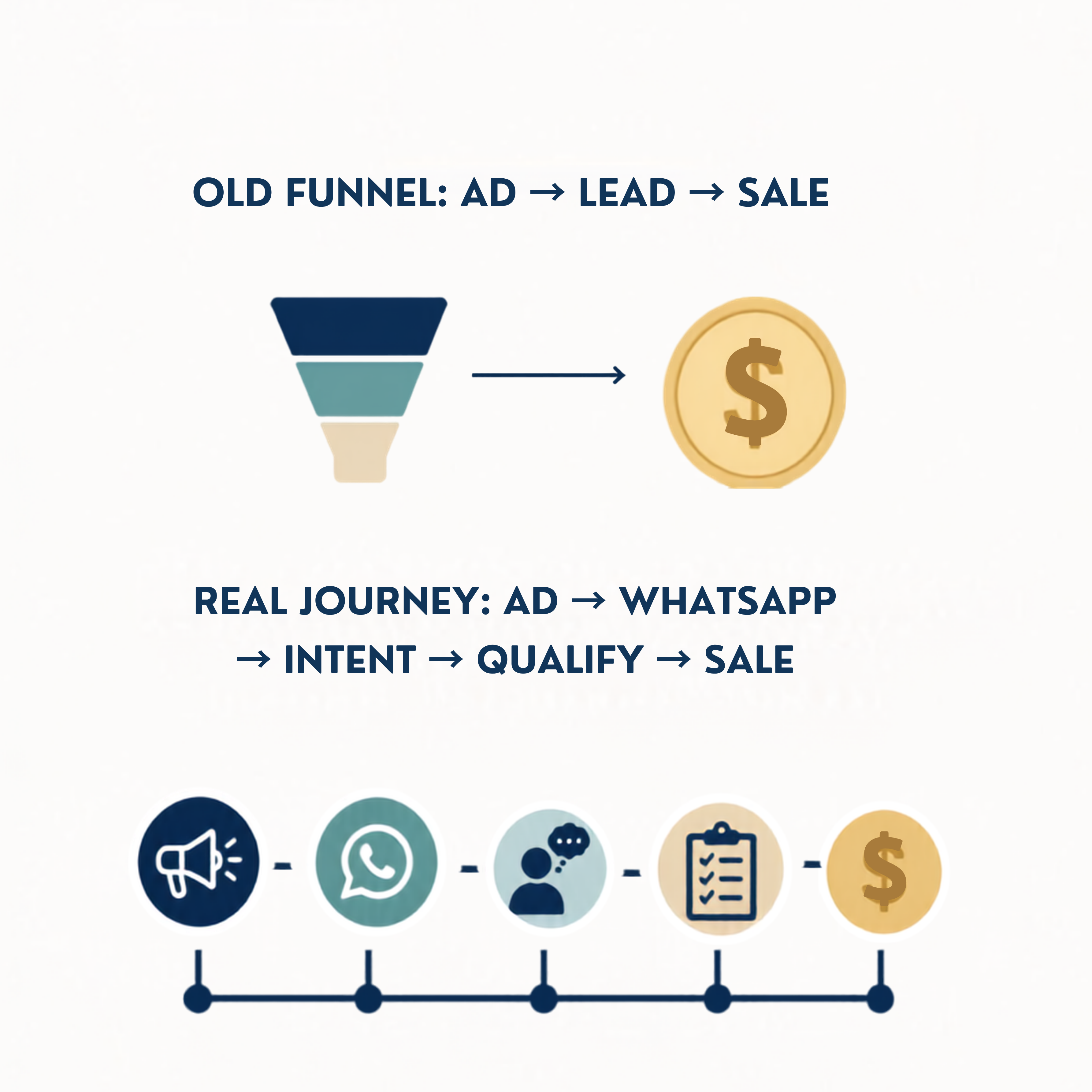
Most businesses think about their funnel like this:
Ad → Lead → Sale
But the real customer journey is much longer:
Ad → WhatsApp conversation → First response → Intent → Qualification → Assignment → Follow-up → Decision → Booking/Purchase
Every step creates an opportunity to lose the customer.
A lead can be lost because:
Nobody replied quickly enough.
The conversation went to the wrong salesperson.
The salesperson didn't understand the customer's intent.
The customer asked a common question and waited for a manual response.
The sales team forgot to follow up.
The customer stopped responding and nobody tried to recover the conversation.
A high-intent lead received the same treatment as a low-intent enquiry.
Managers had no visibility into what was happening across conversations.
So when a business says:
“We're getting leads, but they're not converting.”
The right question isn't always:
“How do we get more leads?”
Sometimes it is:
“What happens to the leads we already have?”
Your Sales Team Shouldn't Have to Treat Every Lead the Same
Not every WhatsApp message represents the same opportunity.
Consider these conversations:
Customer A:
“Hi, what is the price?”
Customer B:
“I want a demo tomorrow.”
Customer C:
“Do you provide support?”
Customer D:
“I'm comparing your product with another company.”
Customer E:
“Can you send me the catalogue?”
These are completely different conversations.
Yet many businesses handle them through the same process:
Message arrives → salesperson opens chat → reads message → decides what to do → replies manually.
At a small scale, this might work.
At 500, 1,000 or 10,000 conversations, it becomes difficult to manage consistently.
The solution isn't necessarily to hire more people.
The solution is to make the system understand what is happening inside those conversations.
The Next Stage of WhatsApp Business Isn't Just Automation
Traditional automation focuses on predefined actions.
If the customer says X, send Y.
If they click A, show B.
If they submit a form, send C.
That works for predictable journeys.
But real customer conversations aren't always predictable.
Customers use different words.
They ask incomplete questions.
They change topics.
They mix multiple intents in one conversation.
They may start by asking about price and then move to a demo.
This is where businesses need to move from simple automation toward intent-based customer handling.
Instead of asking:
“What message should we send?”
The system should first ask:
“What is this customer actually trying to do?”
That distinction matters.
From Lead Generation to Lead Intelligence
A modern WhatsApp sales process should be able to understand more than the fact that a message arrived.
It should help businesses understand:
Who is the customer?
What are they asking for?
What is their intent?
How valuable is the opportunity?
Does this require a human?
Can it be handled automatically?
Which team member should receive it?
When should the customer be followed up?
What happened to the conversation afterwards?
This turns WhatsApp from a messaging channel into a business workflow.
And that is a fundamentally different way of thinking about customer acquisition.
What a Broken Sales Process Looks Like
A broken sales process doesn't always look broken.
The business may have:
✓ Meta Ads
✓ WhatsApp
✓ A sales team
✓ A CRM
✓ Hundreds of leads every month
And still lose opportunities.
Why?
Because the tools may exist individually without working together as one system.
A lead comes from an ad.
The lead enters WhatsApp.
Someone replies.
The conversation gets assigned.
The customer asks another question.
The salesperson gets busy.
The customer waits.
The follow-up doesn't happen.
Eventually, the conversation disappears into an inbox.
Nothing looks obviously broken.
But somewhere between the first message and the final sale, the opportunity was lost.
The Cost of Slow Follow-Ups Is Bigger Than It Looks
Follow-up is one of the simplest parts of sales — and one of the easiest to neglect.
Sales teams are busy.
They have meetings.
They answer existing customers.
They handle calls.
They manage new enquiries.
They update CRMs.
And in between all of that, they are expected to remember which customer needs a follow-up today.
That doesn't scale.
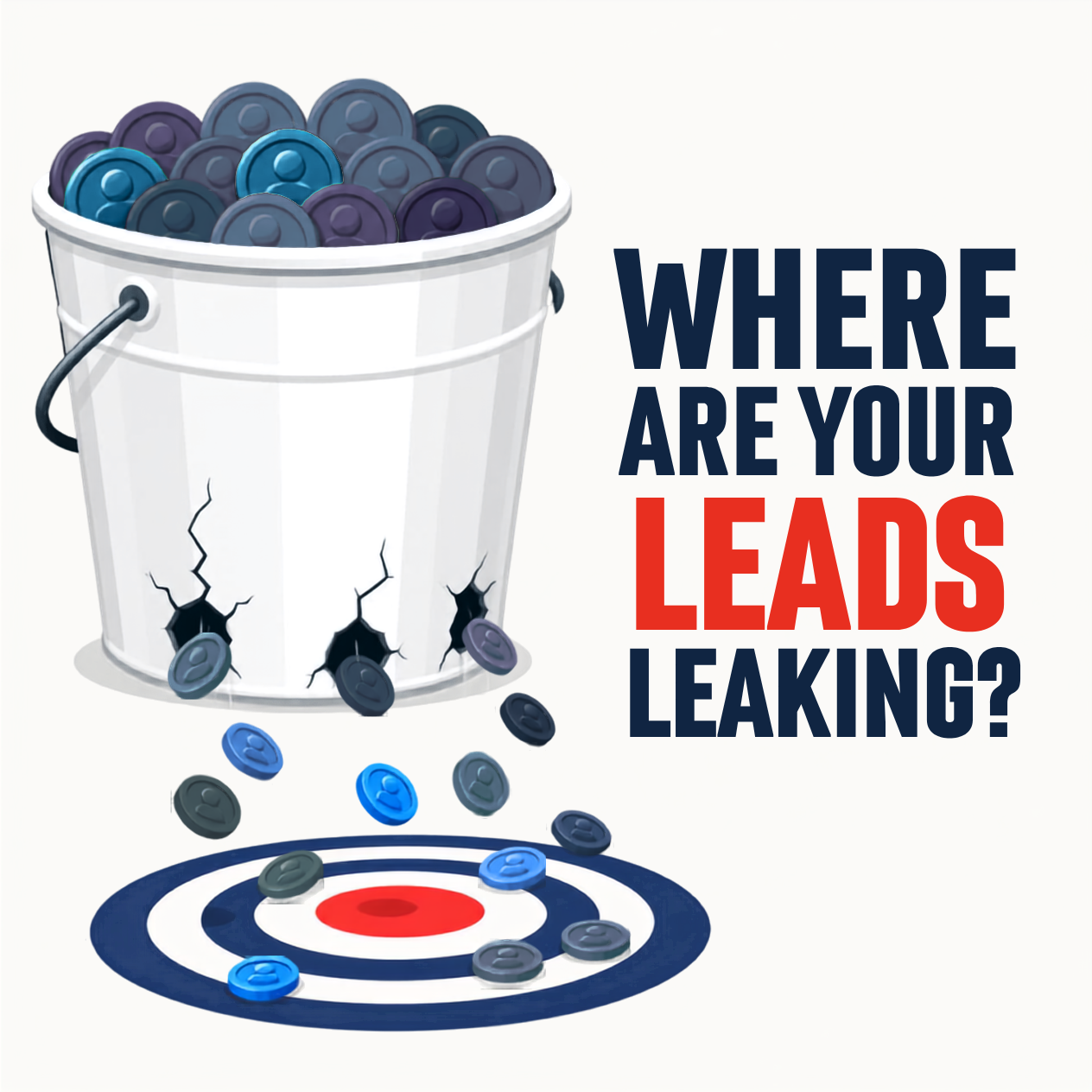
The result is predictable:
Interested customer → no follow-up → customer moves on.
The business may never even know that the lead was lost.
This is why automated follow-ups aren't simply about saving employee time.
They're about creating consistency.
A good system should make sure that a customer doesn't disappear simply because a salesperson had a busy afternoon.
Not Every Lead Deserves the Same Amount of Attention
This is another major problem with traditional lead handling.
Sales teams often have limited time.
If they receive 100 conversations, they cannot spend 20 minutes on every conversation.
So they need prioritisation.
A customer saying:
“I want to book a demo today.”
should not necessarily be treated the same way as:
“Just checking. What do you offer?”
Intent-based systems can help businesses identify these differences and decide what should happen next.
High-intent conversations can be prioritised.
Routine questions can be automated.
Support-related queries can be routed appropriately.
Sales enquiries can reach the right team.
And customers who stop responding can enter a structured recovery journey.
The goal isn't to automate everything.
The goal is to make sure every conversation gets the right next action.
This Is Where an Operating Layer Matters
Businesses don't necessarily need another isolated tool.
They need the different parts of the customer journey to work together.
Think about the modern WhatsApp sales environment:
Ads generate the conversation.
WhatsApp becomes the customer touchpoint.
AI understands the conversation.
Automation handles repetitive actions.
Routing gets the lead to the right person.
Follow-ups keep the opportunity alive.
CRM and integrations provide context.
Analytics show what is actually converting.
The missing piece is the layer connecting all of these activities.
That's the role of a WhatsApp business operating layer.
How Nextel Fits Into This
Nextel is built around a simple idea:
Businesses shouldn't have to manage every WhatsApp conversation manually.
Instead of treating WhatsApp as just an inbox, Nextel helps businesses build a structured journey around every customer conversation.
A lead can enter through an advertising campaign or another business channel and move into WhatsApp.
From there, businesses can use automation, AI, routing, integrations and workflows to determine what happens next.
For example:
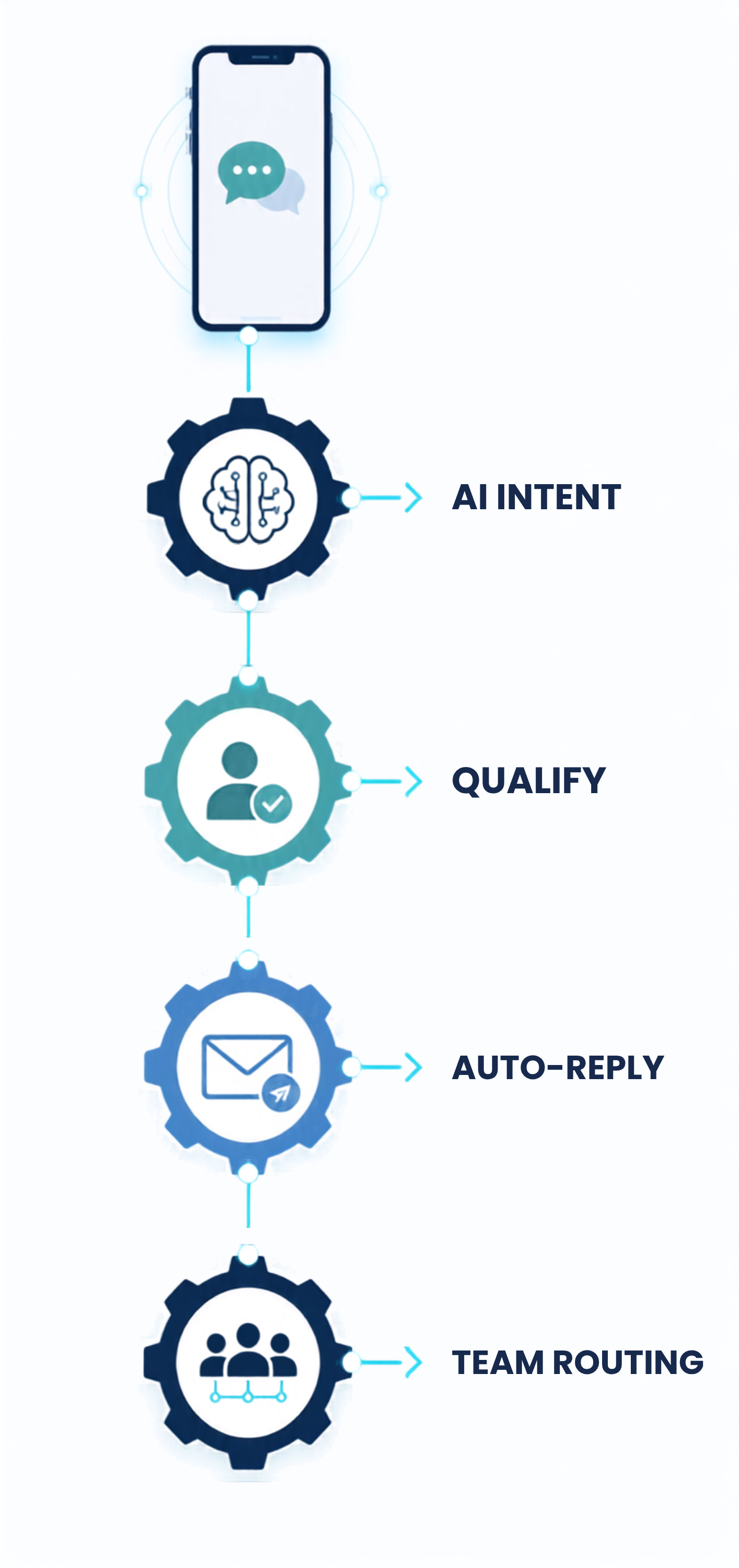
New lead arrives
↓
Conversation starts on WhatsApp
↓
Intent is understood
↓
Lead is qualified or categorised
↓
The right response is triggered
↓
The right team receives the conversation when needed
↓
Follow-up happens automatically
↓
Abandoned conversations can be recovered
↓
The outcome can be tracked
The objective is not to remove humans from the sales process.
It is to remove the repetitive operational work that prevents humans from focusing on the conversations that actually need them.
AI Shouldn't Just Reply. It Should Help Businesses Decide What Happens Next.
This is where the next generation of customer communication is heading.
The value of AI isn't simply:
“It can answer a question.”
The bigger opportunity is:
“It can understand the conversation and trigger the right business action.”
A customer asks about pricing.
The system understands the intent.
Another customer wants support.
The conversation takes a different path.
Someone wants to book a demo.
That conversation gets prioritised.
A lead stops responding.
The system starts a recovery workflow.
This creates a much more intelligent customer journey.
Instead of building hundreds of rigid conversation paths, businesses can build systems that respond to customer intent.
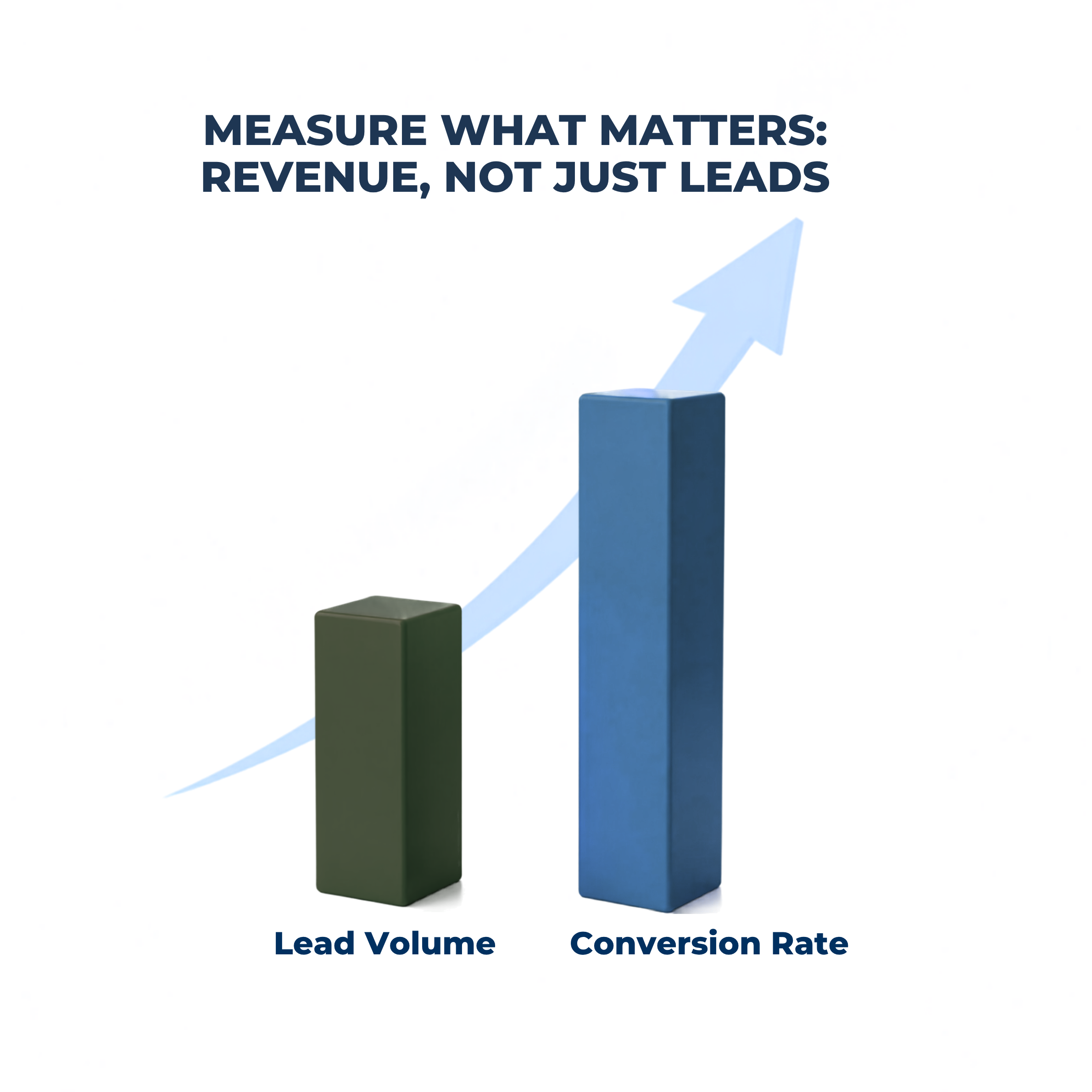
What Businesses Should Measure Instead of Just Lead Volume
Lead volume is an important metric.
But it shouldn't be the only one.
Businesses should also ask:
1. How quickly are we responding?
A lead that waits too long may never become a customer.
2. How many leads are actually being qualified?
A thousand enquiries mean little if the business doesn't know which ones are serious.
3. How many conversations are being assigned correctly?
A lead reaching the wrong person can create unnecessary delays.
4. How many leads receive follow-ups?
The first response is not always enough.
5. How many conversations are abandoned?
This shows where opportunities may be disappearing.
6. How many abandoned conversations are recovered?
Recovery can turn previously lost opportunities into active conversations again.
7. Which intents convert best?
Knowing why customers are contacting you can improve both marketing and sales.
8. How much sales time is spent on repetitive conversations?
This reveals where automation can create operational leverage.
9. How many leads actually become revenue?
Ultimately, the goal isn't more conversations.
It's more meaningful business outcomes from those conversations.
Before You Increase Your Ad Budget, Fix What Happens After the Click
This is the part businesses often overlook.
Suppose your current system generates 500 leads.
If 30% are poorly handled, increasing the lead volume to 1,000 doesn't solve the underlying problem.
It simply gives you more leads to lose.
Before increasing your acquisition budget, examine the journey after the customer contacts you.
Ask:
Are we responding quickly?
Are we understanding intent?
Are we prioritising high-value opportunities?
Are conversations reaching the right people?
Are we following up consistently?
Are we recovering abandoned conversations?
Can our team see the entire customer journey?
If the answer to several of these questions is no, your next investment may not need to be another advertising campaign.
It may need to be a better customer conversation system.
The Real Growth Advantage Is What You Do With the Leads You Already Have
Businesses will always need new leads.
Advertising will always matter.
Marketing will always matter.
But sustainable growth isn't simply about filling the top of the funnel.
It's about building a system that can handle everything that comes through it.
The businesses that win won't necessarily be the ones generating the most conversations.
They'll be the ones that can understand, prioritise and act on those conversations better than everyone else.
Because at scale, the question isn't:
“How many leads did we generate?”
It's:
“How many opportunities did we actually handle well?”
More leads won't fix a broken sales process.
A better process will.
And when that process is built around the conversations where customers already want to engage, WhatsApp can become much more than a messaging channel.
It can become the operating layer connecting marketing, conversations, AI, sales and customer outcomes.
That's where the next phase of WhatsApp-led growth begins.