
WhatsApp API Pricing Changes Are Coming: Is Your Business Ready?
Meta’s October 1 WhatsApp API Change: Why Businesses Need to Stop Treating Every Lead the Same
If every WhatsApp reply starts costing you, would you still reply to every lead the same way?
For years, WhatsApp has been one of the easiest places for businesses to turn customer questions into conversations.
A customer messages:
“Hi, I’m interested.”
Your team replies.
They ask another question.
You answer.
They ask again.
You answer again.
Maybe they buy.
Maybe they disappear.
Until now, the cost of those service replies inside the open 24-hour customer-service window has been different.
But from October 1, 2026, Meta is changing the economics of WhatsApp Business Platform messaging.
Service messages sent inside the 24-hour customer-service window will become chargeable, and Utility messages sent inside that window will also become chargeable. The 24-hour window itself does not disappear—it remains a messaging rule, but the replies inside it will no longer be free.
And that changes the question businesses should be asking.
Not:
“How do we reply to every lead?”
But:
“Which lead deserves our next message?”
First, What Exactly Is Changing on October 1?
Let's make this simple.
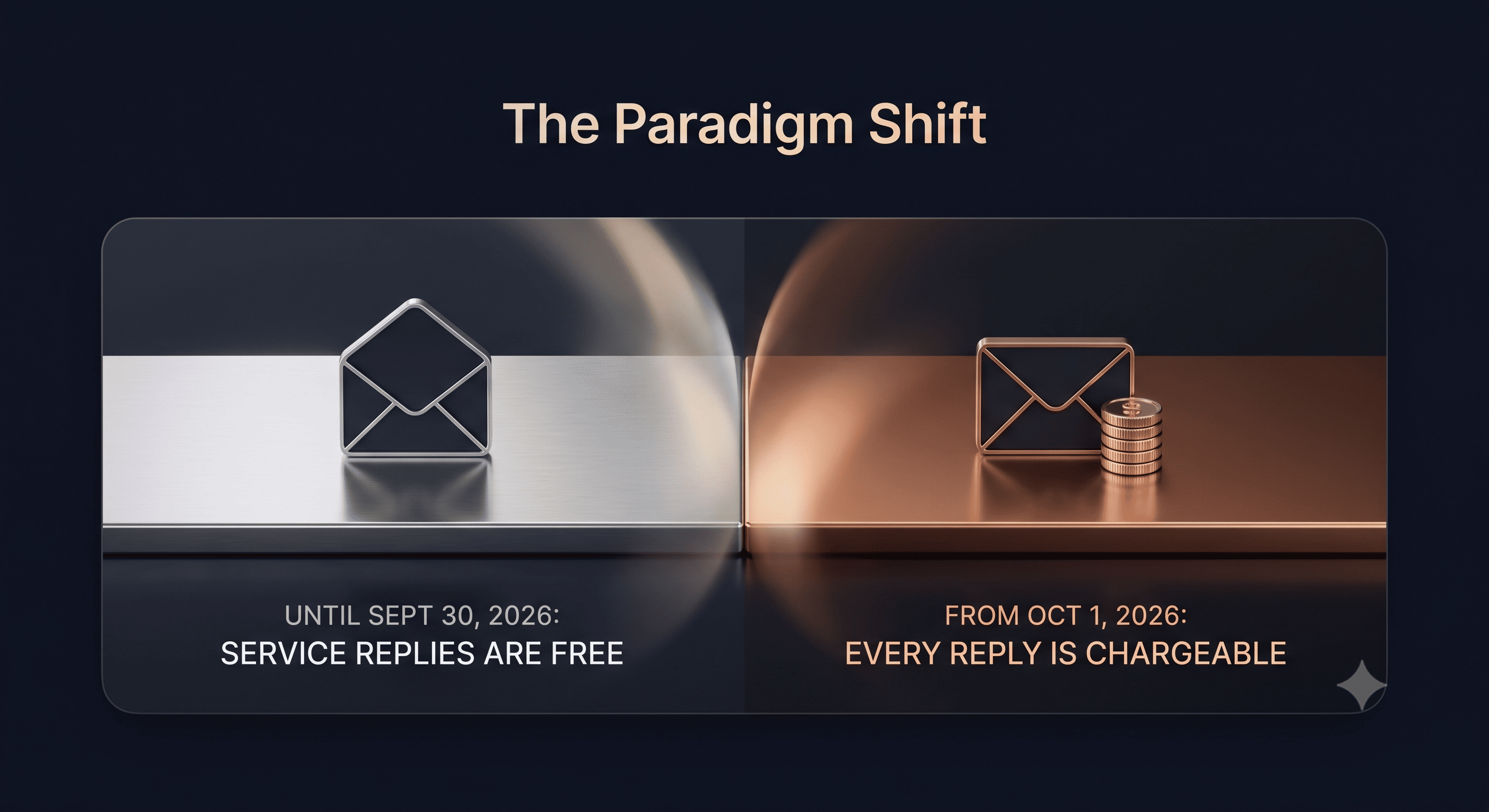
Until September 30, 2026
When a customer messages your business and you respond within the open 24-hour customer-service window:
Service replies → Free
And Utility templates sent inside that window have also been free under the current rules.
From October 1, 2026
That changes.
Service replies → Chargeable
Utility templates inside the 24-hour window → Chargeable
The charge is applied per delivered message according to Meta's applicable market rates. Service messages do not get the same volume-tier discounts available to some other message categories.
Marketing messages remain separately chargeable.
And there is an important exception:
The 72-hour Free Entry Point window remains a separate advantage for eligible conversations originating from Click-to-WhatsApp Ads or eligible Facebook Page CTA entry points.
So this isn't:
“WhatsApp messaging is becoming paid.”
It's more specific.
The economics of everyday customer replies are changing.
And businesses need to change how they manage conversations.
Why Does This Matter to Your Business?
Let's say you receive 1,000 WhatsApp conversations in a month.
Today, your team may think:
“Let's answer everyone.”
Fair enough.
When replies are effectively free inside the customer-service window, there is little incentive to think deeply about the cost of every additional reply.
But now imagine your sales team sends:
Reply 1
↓
Reply 2
↓
Reply 3
↓
Reply 4
↓
Reply 5
to thousands of conversations.
Suddenly, the number of outbound messages matters.
And here's the uncomfortable part:
Not every lead is equally valuable.
Some customers are ready to buy.
Some are comparing options.
Some are just curious.
Some aren't even the right customer for your product.
Yet traditionally, all four can end up receiving the same amount of attention.
That's inefficient.
The Future of WhatsApp Isn't “Reply Faster”
It's:
Reply Smarter.
Imagine two leads arrive at the same time.
Lead A
“What's the price?”
Then:
“Can I get a demo today?”
Then:
“Send me the payment details.”
Lead B
“Hi.”
You reply.
“Okay.”
No further response.
Now ask yourself:
Should both leads get the same follow-up?
Obviously not.
Lead A is demonstrating high purchase intent.
Lead B is showing very little signal.
But if your system treats both conversations equally, your team spends valuable time—and potentially messaging spend—without considering the probability of conversion.
That's where AI changes the equation.
Stop Looking at Leads as “New” and “Old”
Start looking at them as:
High Intent
Medium Intent
Low Intent
An AI system can analyse conversation signals such as:
What the customer is asking
Whether they're asking about pricing
Whether they're asking about availability
Whether they're comparing products
Whether they're ready to book
Whether they've shared a requirement
Whether they've responded to previous messages
Where they are in the conversation
And from those signals, the business can build a much clearer picture:
Who is actually worth pursuing right now?
Meet the New WhatsApp Metric:
Lead Value
Instead of asking:
“How many leads did we get?”
start asking:
“How valuable is each lead?”

Imagine your AI gives every incoming lead a conversion score.
Lead 01
92% — High Intent
“I want to buy today. How do I pay?”
Lead 02
74% — Strong Intent
“Can you show me the advanced plan?”
Lead 03
41% — Exploring
“What exactly do you offer?”
Lead 04
12% — Low Intent
“Just checking.”
Now your sales team doesn't have to guess.
The system can prioritize conversations based on the signals available.
92% first.
Then 74%.
Then 41%.
And the low-intent lead doesn't necessarily disappear.
It simply doesn't receive the same level of immediate human attention.
And This Is Where AI Becomes More Than a Chatbot
Most people think AI on WhatsApp means:
Customer asks → AI answers.
That's only the first layer.
The more powerful model is:
Customer messages → AI understands → AI scores intent → AI decides the next best action → AI handles what it can → Human steps in when it matters.
That's a completely different system.
You're no longer using AI just to answer questions.
You're using AI to help decide:
Where should the business spend its attention?
Let's Take a Real Example
Imagine a business gets 500 WhatsApp leads from its campaigns.
The business has a sales team of three people.
If every lead is treated equally, the team might spend hours answering:
“Price?”
“Details?”
“Okay.”
“Where are you located?”
“I'll think about it.”
Meanwhile, a genuinely high-intent customer might be waiting.
Now introduce AI.
The system analyses the conversations.
It identifies:
65 High-Intent Leads
Ready to buy / book / speak to sales
140 Medium-Intent Leads
Interested but need more information
295 Low-Intent Leads
Weak or unclear buying signals
Now the sales team knows where to focus.
The AI can handle repetitive questions and information requests.
The human team can focus on the conversations with the strongest buying signals.
Same 500 leads.
Very different workflow.
But What About the ₹50 Per Lead Example?
This is where businesses need to think carefully.
Let's say your business decides:
“We want our target acquisition cost to be around ₹50 per lead.”
That is a business target, not a guaranteed price Meta will give you for every lead.
Meta's advertising auction determines actual campaign costs.
You cannot simply tell Meta:
“Give me every lead for ₹49.”
But you can build an intelligent system around your target economics.
For example:
Target CPL: ₹50
Your system can then help answer:
Which leads are converting?
Which sources are producing better-quality leads?
Which conversations are showing stronger purchase intent?
Which leads deserve immediate attention?
Where are we spending effort without seeing conversions?
That gives you something much more valuable than simply knowing:
“We got 500 leads.”
You start understanding:
Which 500 leads were actually worth something.
This Changes How You Think About Advertising
Traditional performance marketing often looks like:
Spend ₹X
↓
Generate Y leads
↓
Calculate CPL
But the smarter model is:
Spend ₹X
↓
Generate leads
↓
Understand lead quality
↓
Predict conversion potential
↓
Prioritize high-value conversations
↓
Convert more efficiently
The goal isn't necessarily to get the cheapest possible lead.
The goal is to get the best possible outcome from the money you're already spending.
Because a ₹30 lead that never converts isn't automatically better than a ₹70 lead that becomes a ₹10,000 customer.
What Should Businesses Do Differently After October 1?
Here are the five biggest changes we recommend.
01 — Stop Sending Fragmented Replies
If one answer can communicate everything the customer needs, don't turn it into five separate messages.
Instead of:
“Yes.”
“We do.”
“The price is…”
“You can…”
“I'll send…”
Think:
One clear, useful response.
Fewer unnecessary messages can mean a more efficient conversation.
02 — Qualify Earlier
Don't spend ten messages discovering whether the person is even a potential customer.
Ask intelligent questions early.
For example:
“Are you looking to buy now, comparing options, or just exploring?”
One useful question can tell you far more than five generic replies.
03 — Let AI Handle Repetition
Questions like:
“What's the price?”
“How does it work?”
“Do you deliver?”
“What are the plans?”
don't always need a human salesperson.
AI can handle repetitive information requests and keep the conversation moving.
Your team can step in when the conversation actually requires human judgement.
04 — Prioritize Based on Intent
Not every lead deserves the same urgency.
A customer saying:
“Send payment details.”
should not sit behind someone saying:
“Just browsing.”
AI can help identify these differences and prioritize conversations accordingly.
05 — Measure Revenue, Not Just Replies
Your dashboard shouldn't stop at:
Messages sent
or
Cost per lead
Track the complete journey:
Ad Spend
↓
Leads
↓
Qualified Leads
↓
High-Intent Leads
↓
Conversions
↓
Revenue
That's the number that matters.
And What About CTWA Ads?
Here's where this gets even more interesting.
Eligible Click-to-WhatsApp Ads and Facebook Page CTA conversations can still benefit from the 72-hour Free Entry Point mechanism under the applicable rules.
So instead of thinking:
“Meta is making WhatsApp more expensive.”
Think:
“The value of every WhatsApp conversation just became more important.”
If a high-intent lead comes through an eligible CTWA entry point, you want to make that opportunity count.
Respond.
Understand.
Qualify.
Follow up.
Convert.
Don't waste the window.
The New WhatsApp Funnel
The old model:
AD
↓
LEAD
↓
REPLY
↓
REPLY
↓
REPLY
↓
SALE?
That's reactive.
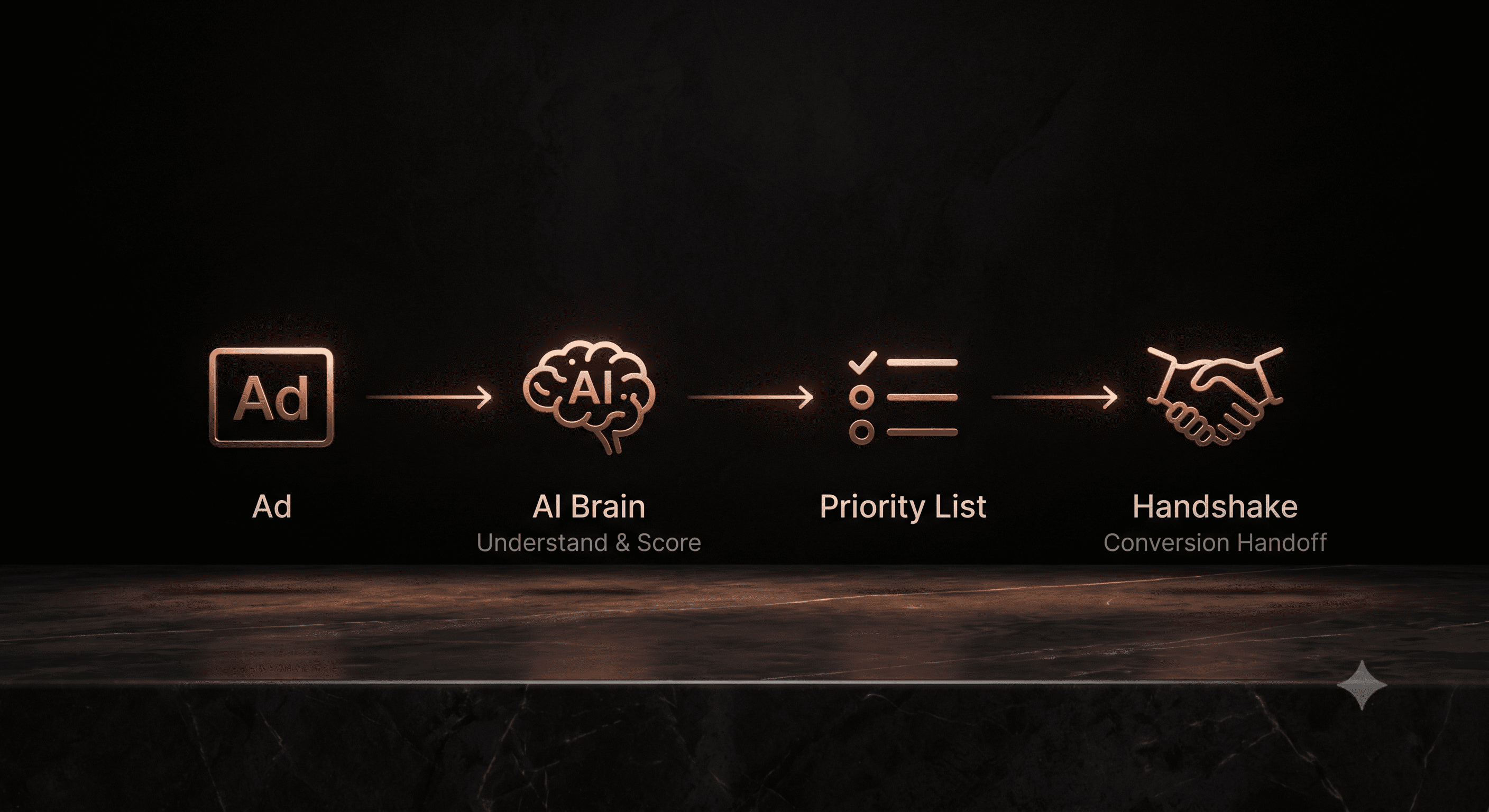
The smarter model:
AD
↓
↓
AI UNDERSTANDS
↓
LEAD SCORE
↓
NEXT BEST ACTION
↓
AUTOMATED NURTURE
↓
HUMAN HANDOFF
↓
CONVERSION
That's proactive.
Imagine Your AI Saying This:
Not literally to the customer.
To your business.
“This lead is showing strong buying intent.”
“This customer is comparing plans.”
“This lead has not shown enough intent for immediate sales intervention.”
“This conversation is ready for human handoff.”
Now your sales team doesn't have to read 500 conversations to find the 50 that matter most.
AI finds the signal inside the noise.
This Is the Next Step Beyond Automation
Automation used to mean:
“When X happens, send Y.”
Modern AI can go further.
It can understand context.
It can identify patterns.
It can help classify intent.
It can decide which conversations need attention.
And it can automate the repetitive parts of the journey.
So instead of:
Automation = more messages
we move toward:
AI = better decisions.
That's the shift businesses should be preparing for.
What Nextel Is Building Around This
At Nextel, our approach isn't:
“Let's reply to every WhatsApp message as quickly as possible.”
It's:
“Let's understand which conversations actually deserve attention.”
The AI can help businesses:
Capture leads
↓
Understand conversations
↓
Identify intent
↓
Prioritize opportunities
↓
Automate repetitive interactions
↓
Follow up intelligently
↓
Route high-intent leads to the right team
The objective is simple:
Don't make your team work harder on every lead.
Make your system work smarter across every lead.
One Important Reality Check
AI cannot magically control Meta's auction and guarantee:
“Every lead will cost ₹50.”
Your actual advertising cost depends on Meta's auction, audience, creative, competition, campaign setup and other factors.
What AI can do is help you become much smarter about what happens after the lead arrives.
And that distinction matters.
Because reducing wasted effort, identifying stronger leads and improving conversion efficiency can make the economics of your existing ad spend much better.
October 1 Isn't Just a Pricing Change
It's a mindset change.
For a long time, businesses could afford to think:
“Just reply.”
Now they need to think:
“Why are we replying?”
Is the customer interested?
Are they qualified?
Are they asking buying-intent questions?
Are they close to conversion?
Should AI handle this?
Should sales step in?
Should we follow up?
Should we stop spending attention here?
These are no longer questions a sales manager should have to answer manually for every conversation.
This is exactly where AI belongs.
The Businesses That Win Won't Be the Ones Sending the Most Messages
They'll be the ones sending:
The right message
To the right lead
At the right moment
For the right reason.
Because once messaging has a cost, conversation quality matters more than conversation volume.
And once AI can understand intent, businesses don't have to treat every lead equally.
The Future of WhatsApp Sales Is Selective
Not:
Reply to everyone.
But:
Understand everyone.
Not:
Follow up with everyone.
But:
Know who needs a follow-up.
Not:
Spend equally on every conversation.
But:
Understand which conversations have the strongest potential to become revenue.
Not:
More automation.
But:
Smarter automation.
October 1 Is Coming.
The businesses that prepare early won't simply be looking for ways to reduce WhatsApp costs.
They'll be redesigning the entire customer journey.
They'll ask:
How many messages are we sending?
Which leads are receiving them?
Which conversations are converting?
Where is our sales team spending time?
Which leads deserve immediate attention?
How much revenue is each campaign actually generating?
And most importantly:
Are we treating every lead equally when we shouldn't?
Don't Reply to Every Lead. Understand Every Lead.
Meta's October 1 change makes one thing clear:
The era of treating every WhatsApp conversation the same is ending.
The smarter approach is to let AI understand the conversation, identify intent, prioritize opportunities and automate the repetitive work—while your team focuses on the leads that actually need them.
You don't need your sales team manually deciding what to do with every single chat.
**Let AI find the signal.
Let your team close the opportunity.**
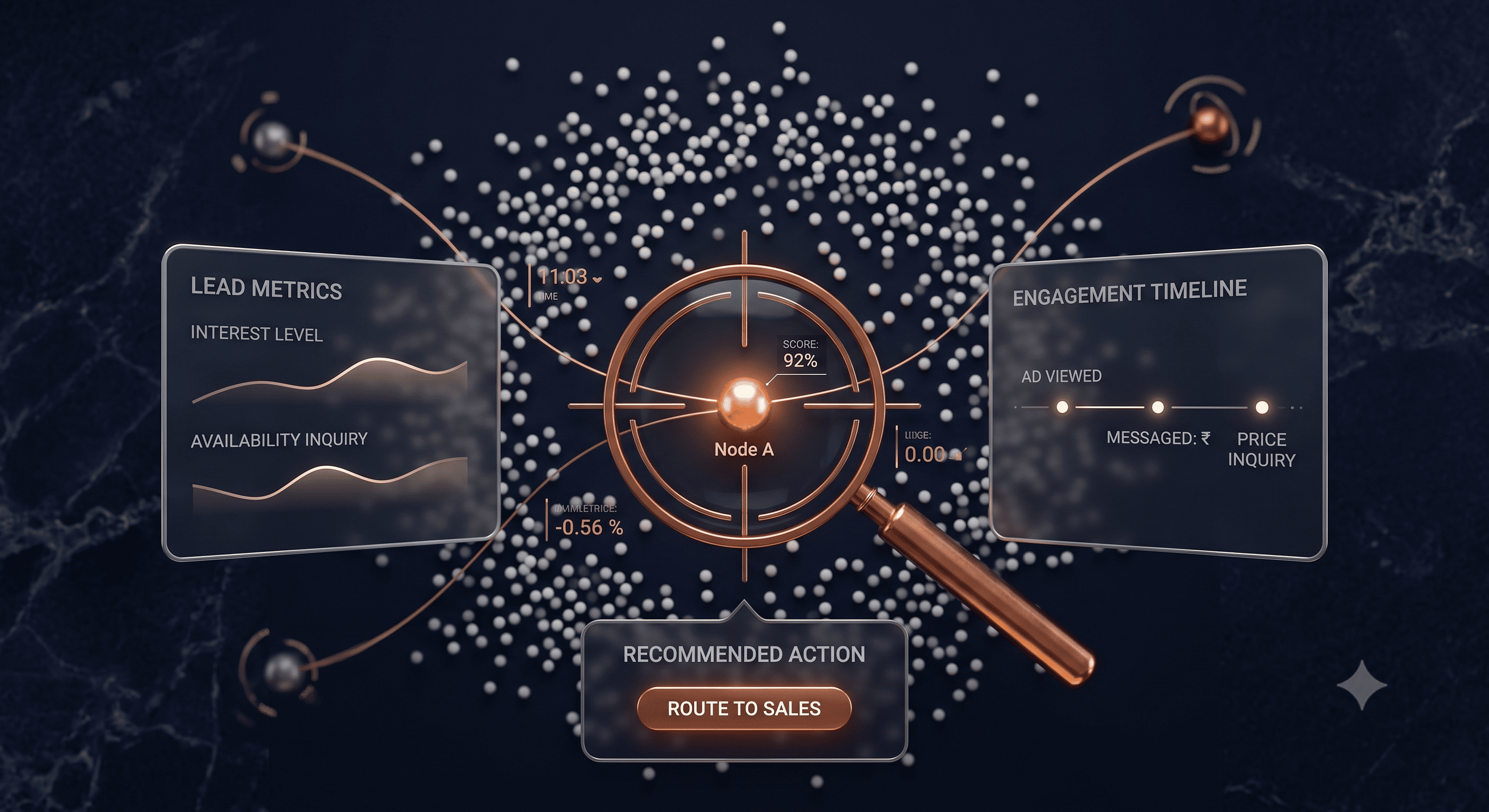
With Nextel, businesses can build AI-powered WhatsApp journeys that go beyond automated replies—helping teams capture, qualify, prioritize and convert leads more intelligently.