
63 Million Businesses. One WhatsApp Revolution.
63 Million Businesses. One Massive Opportunity.
India has over 63 million small and medium businesses.
Together, they employ more than 110 million people and contribute nearly 30% of the country's GDP.
Yet most of these businesses still manage customer communication the same way:
Manually.
On WhatsApp.
One message at a time.
That gap between the scale of Indian SMBs and the state of their automation — may become one of the biggest opportunities in Indian business technology this decade.
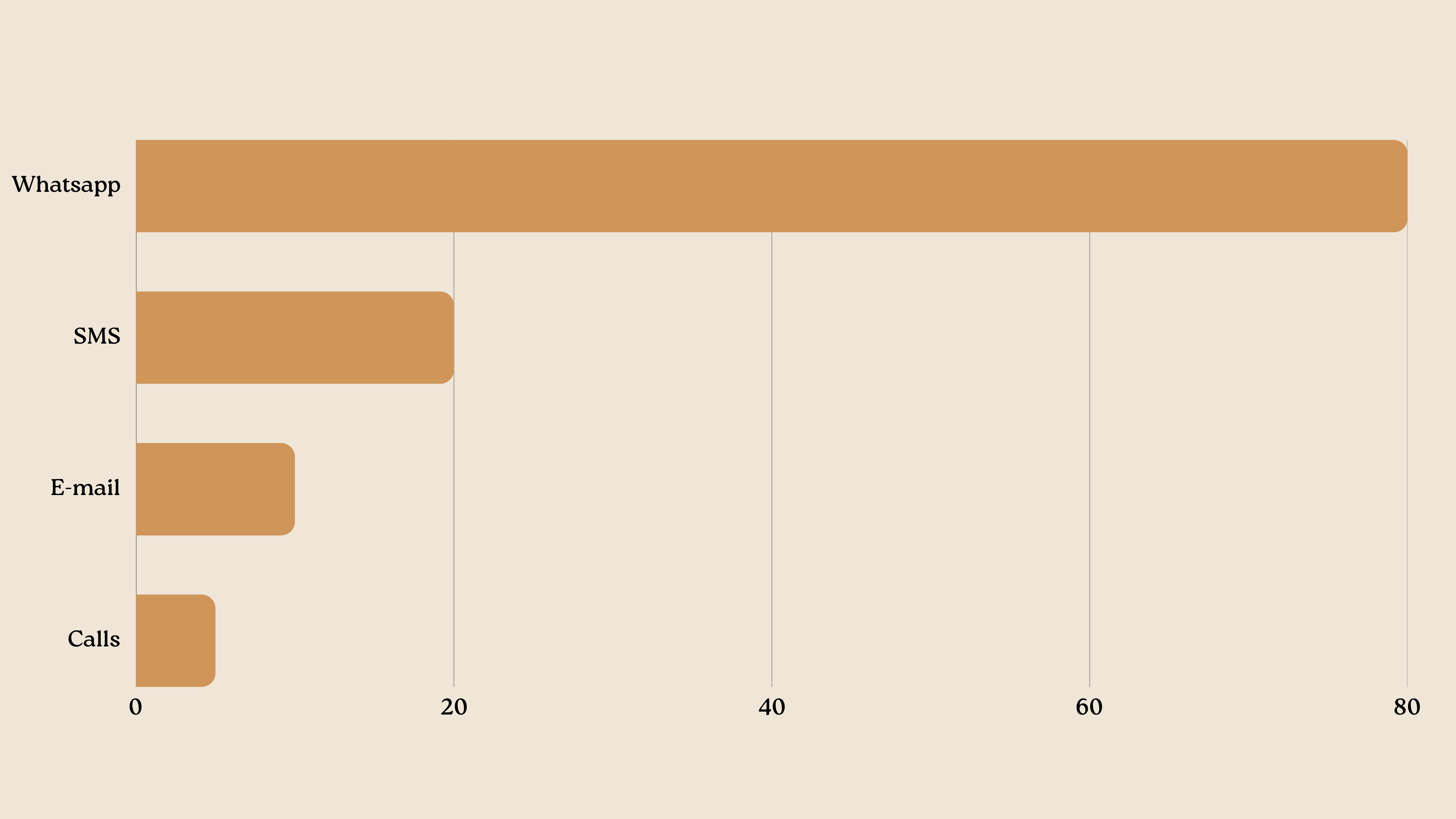
The Operating System of Indian SMBs Is Already WhatsApp
India has more than 500 million WhatsApp users, making it the country's dominant communication platform.
For SMBs, WhatsApp is no longer just a messaging app.
It has quietly become:
the sales inbox
the support desk
the booking system
the follow-up channel
the retention engine
Today, businesses across India already run daily operations on WhatsApp:
salons booking appointments
clinics answering patient queries
real estate agents managing leads
coaching centres handling admissions
retailers processing repeat orders
The channel has already been chosen by the market.
The only question now is whether businesses continue managing it manually.
What Manual WhatsApp Management Actually Costs
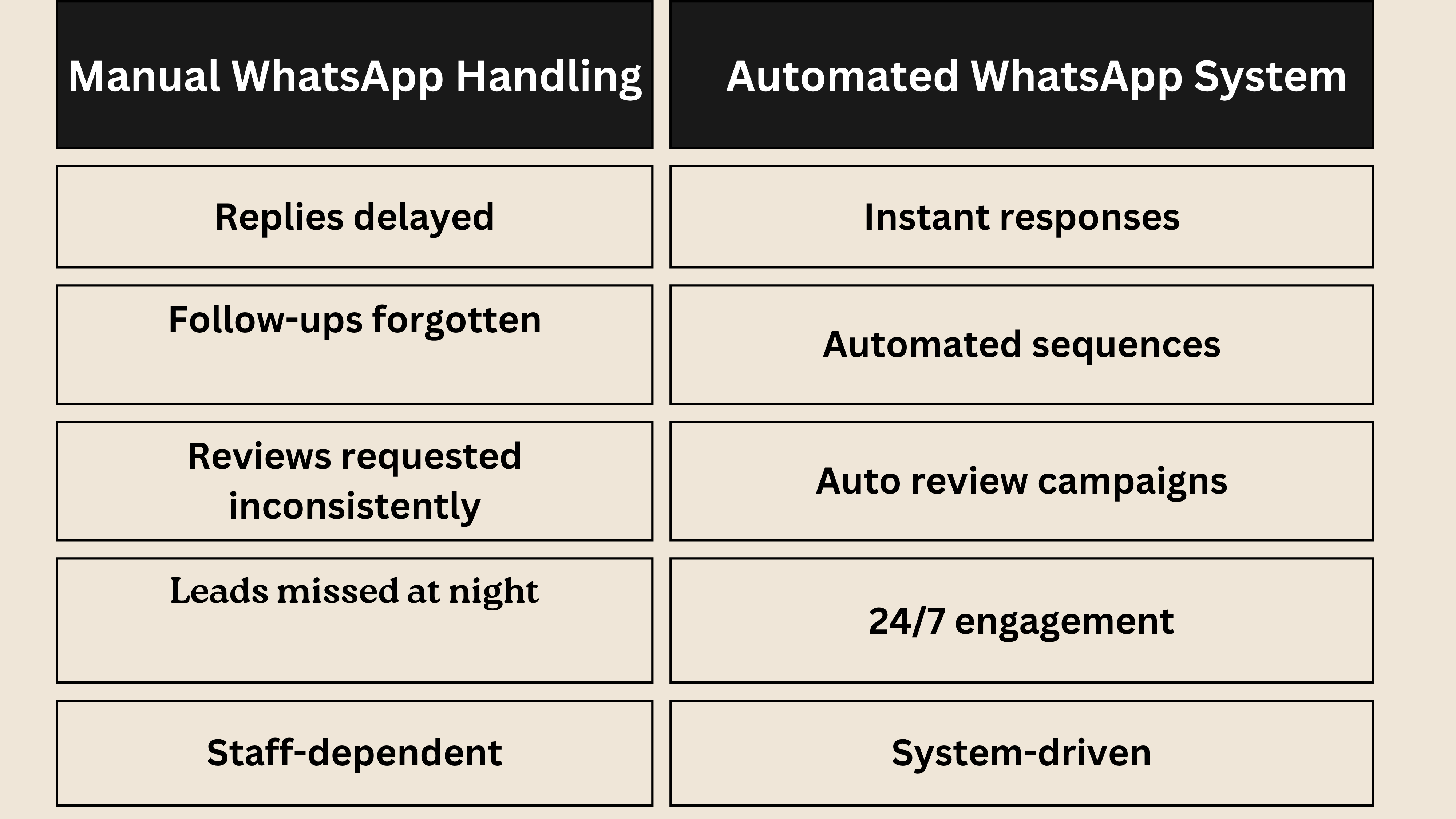
Most SMBs underestimate the cost of manual communication because the losses are invisible.
But the numbers compound quickly.
A small business with:
5 employees
1 staff member handling WhatsApp
2 hours/day spent on replies
…is spending 40–50 hours every month on repetitive communication tasks alone.
That typically translates into:
₹6,000–₹10,000/month in operational cost
slower lead response times
inconsistent follow-ups
missed reviews
lost repeat customers
And that's before calculating lost revenue.
The Real Cost Is Missed Intent
The biggest problem isn't staff time.
It's delay.
Research across SMB sales consistently shows that leads contacted within 5 minutes convert dramatically better than leads contacted even 30 minutes later.
But most Indian SMB inquiries happen:
after business hours
during weekends
when staff are busy
or when nobody is assigned to respond
By morning, the customer has often already moved to a faster competitor.
Consumer Behaviour Has Already Changed
Between 2020 and 2024, customer expectations shifted significantly in India.
Earlier, messaging a business on WhatsApp felt optional.
Now it feels expected.
Customers increasingly assume businesses will:
respond quickly
confirm bookings instantly
send reminders
follow up automatically
remain reachable on WhatsApp
When businesses fail to deliver this experience, customers rarely adjust expectations.
They simply move to businesses that already do.
The consumer side is ready.
The business side is still catching up.
Why WhatsApp Automation Became Practical Only Recently
For years, automation existed mainly for enterprise companies.
That changed between 2023 and 2025.
Three shifts made WhatsApp automation accessible for Indian SMBs:
1. API Access Became Easier
Meta expanded access to the WhatsApp Business API through official Business Solution Providers.
Platforms like Nextel now allow SMBs to deploy automation without technical infrastructure or enterprise budgets.
2. AI Conversations Improved Dramatically
Older chatbots failed the moment a customer asked something unexpected.
Modern AI systems can now:
answer natural questions
qualify leads
book appointments
handle contextual conversations
escalate only when needed
The experience feels conversational instead of robotic.
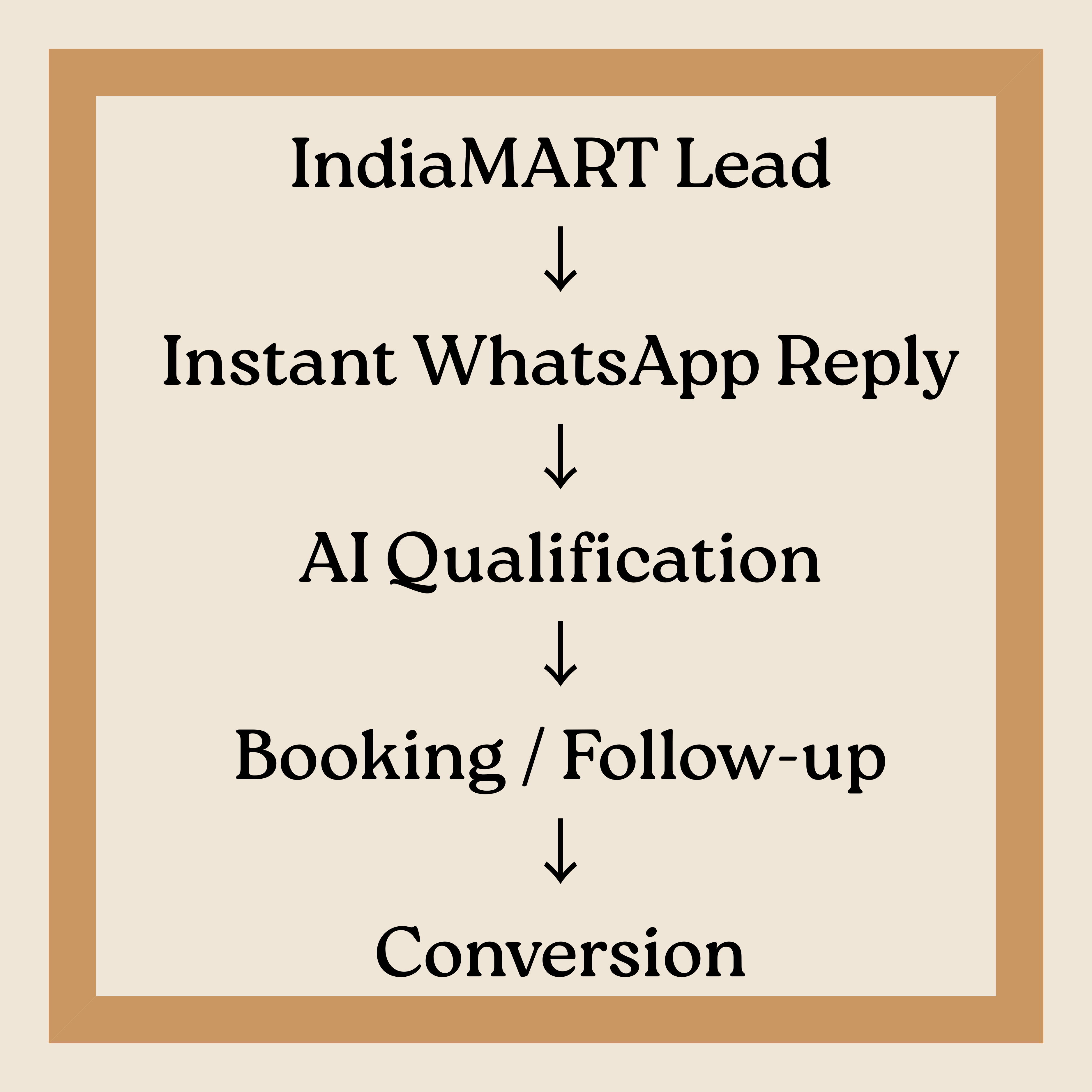
3. Indian Lead Sources Started Integrating
India-specific platforms like:
IndiaMART
JustDial
99acres
…are increasingly connecting with WhatsApp workflows.
A lead generated at 11:30 PM can now receive a response within seconds automatically.
That changes conversion economics entirely.
The Businesses Moving Early Are Compounding Advantages
The strongest effect of automation isn't efficiency.
It's accumulation.
A salon automatically collecting Google reviews every day may generate:
500–600 additional reviews annually
A coaching centre running automated nurture campaigns may convert:
materially more leads without increasing ad spend
A real estate agency responding instantly 24/7 creates:
higher trust
better referrals
stronger conversion consistency
Over time, these advantages become difficult to reverse.
The Next Phase of Indian SMB Technology
The important point is this:
Indian SMB automation will not be solved entirely by global SaaS products designed for Western markets.
India operates differently.
The winning platforms will likely be built for:
WhatsApp-first communication
Indian lead marketplaces
regional languages
mobile-first operators
affordability-sensitive SMBs
Indian response behaviour patterns
This market is still early.
But the direction is becoming obvious.
63 million businesses are already on WhatsApp.
The infrastructure layer around them is only now being built.
And whoever builds that layer well will shape how the next generation of Indian SMBs operates.